
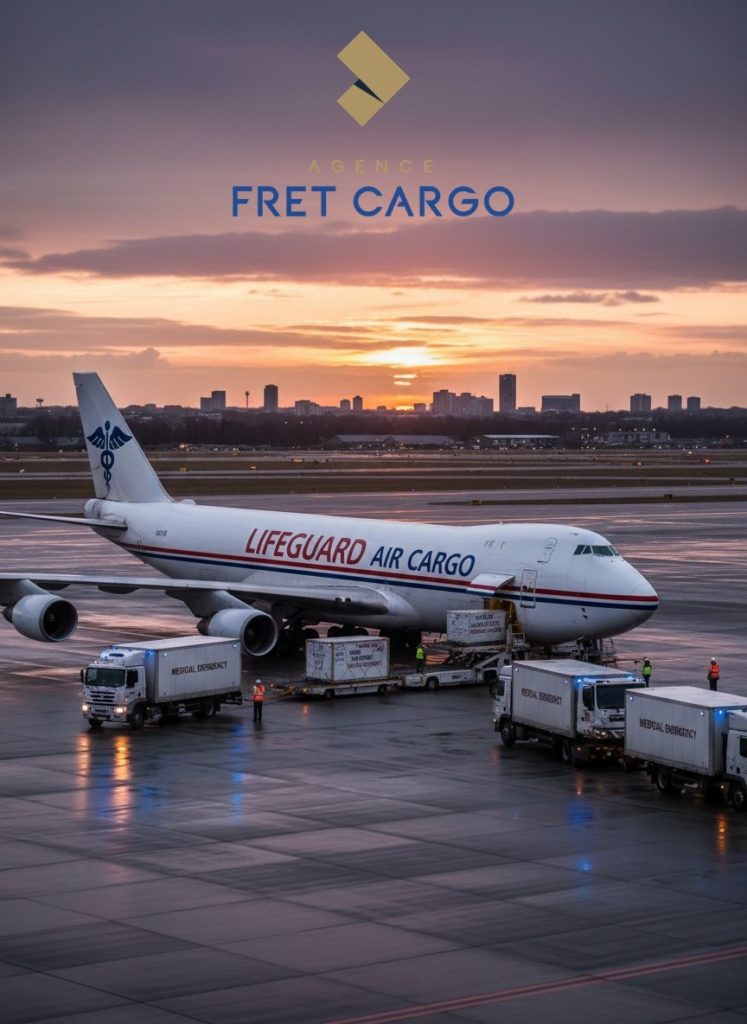
In the world of logistics, “express” usually means next business day. But in Emergency Medical Shipping, “express” can mean the difference between life and death.
Whether it is a rare antidote for a poisoning victim in Zurich, a replacement organ valve for a surgery in London, or a specific chemotherapy batch for a patient in New York, the timeline is non-negotiable.
Delivering life-saving drugs in under 24 hours is the Formula 1 of logistics: high speed, high stakes, and zero margin for error. This article explores how specialized freight forwarders achieve the impossible when the clock is ticking.
The “Next Flight Out” (NFO) Protocol
Standard air freight waits for consolidation to save money. Emergency medical shipping cannot afford this delay. The industry standard here is NFO (Next Flight Out).
This process involves:
- Immediate Pickup: A dedicated courier drives directly to the pharmaceutical warehouse.
- Direct Injection: The shipment bypasses standard sorting hubs and is inducted directly at the airline’s cargo terminal.
- Tail-to-Tail Transfer: If a connecting flight is needed, the shipment is prioritized to move from one aircraft tail to the next without waiting in a holding area.
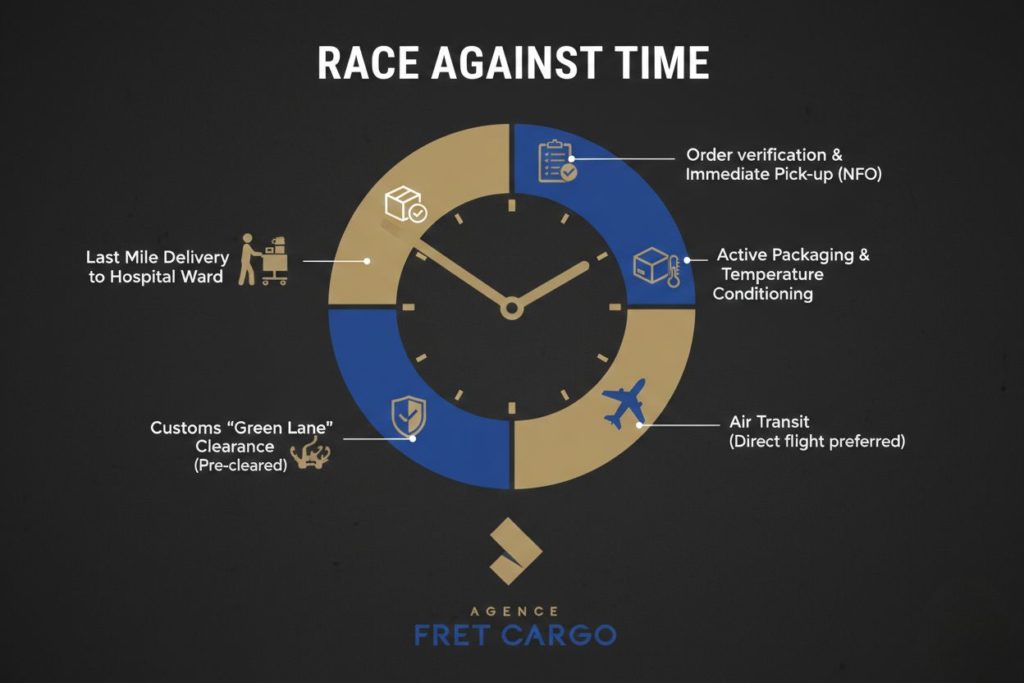
Expert Insight: For ultra-critical shipments (e.g., cell & gene therapies), an On-Board Courier (OBC) is often used. This is a person who physically carries the medication as hand luggage, ensuring it never leaves their sight and bypasses cargo hold delays.
Strict IATA Temperature Control Regulations (TCR)” or “industry standard
Cold Chain: Protecting the Payload
Most emergency drugs – biologics, vaccines, and insulin – are strictly temperature-sensitive. A deviation of just 2 degrees can render the medication chemically inert or even toxic. [+2]
To guarantee safety during a frantic 24-hour journey, we rely on two types of packaging:
1. Active Packaging (The “Flying Fridge”)
These are battery-powered containers (like Envirotainers) with built-in HVAC systems. They actively cool or heat the cargo area.
- Best for: Large pallets or extremely sensitive high-value drugs.
- Con: Heavy and expensive.
2. Passive Packaging (The “High-Tech Box”)
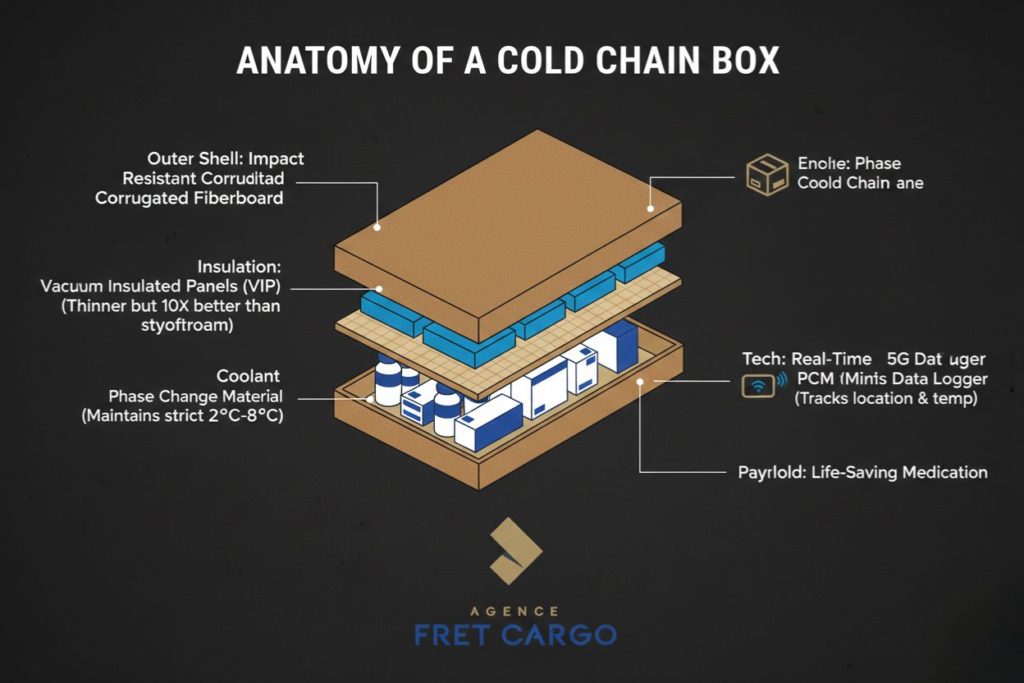
For smaller emergency shipments, we use advanced passive systems. Instead of simple ice packs, we use Phase Change Materials (PCMs). These are engineered fluids that freeze and melt at specific temperatures (e.g., exactly +5°C).
Combined with Vacuum Insulated Panels (VIPs) – which offer 10 times the insulation of standard foam – these boxes can hold a temperature of 2°C to 8°C for up to 96 hours, providing a safety buffer if the flight is delayed.
2. Passive Packaging (The “High-Tech Box”)
For smaller emergency shipments, we use advanced passive systems. Instead of simple ice packs, we use Phase Change Materials (PCMs). These are engineered fluids that freeze and melt at specific temperatures (e.g., exactly +5°C).
Combined with Vacuum Insulated Panels (VIPs) – which offer 10 times the insulation of standard foam – these boxes can hold a temperature of 2°C to 8°C for up to 96 hours, providing a safety buffer if the flight is delayed.
The Invisible Barrier: Customs Clearance
The fastest flight in the world is useless if the package gets stuck in customs.
In Emergency Medical Shipping, the paperwork starts before the package moves.
- Pre-Clearance: We submit commercial invoices and certificates of origin electronically while the plane is in the air.
- The “Health Release”: Many countries require a secondary approval from their health ministry (like the FDA in the US or Swissmedic in Switzerland). Emergency logistics providers have direct lines to these agencies to secure immediate release upon landing.
Real-Time Visibility: Trust but Verify
When a hospital is prepping a patient for surgery based on an ETA, “probably arriving soon” is not an acceptable status update.
Modern emergency shipments are equipped with IoT (Internet of Things) Data Loggers. These devices transmit real-time data via cellular networks:
- GPS Location: Accurate to within meters.
- Temperature: Alerts if the box gets too warm or cold.
- Shock/Light: Alerts if the box is dropped or opened unauthorized.
If a delay occurs (e.g., a flight diversion), the logistics team sees it instantly and can activate contingency plans, such as arranging a helicopter for the final leg or re-routing a courier.
Conclusion
Emergency Medical Shipping is more than just moving boxes; it is a critical link in the healthcare chain. It requires a partner who understands Good Distribution Practice (GDP), has deep relationships with airlines, and possesses the infrastructure to maintain an unbroken cold chain.
When 24 hours is all you have, every single minute of logistics engineering counts.
Does your pharmaceutical supply chain have an emergency contingency plan?
Don’t wait for a crisis to find out. Contact Agence Fret Cargo today to set up your 24/7 emergency shipping protocol.