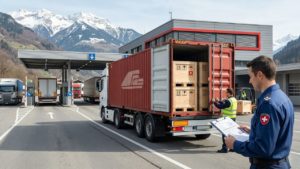

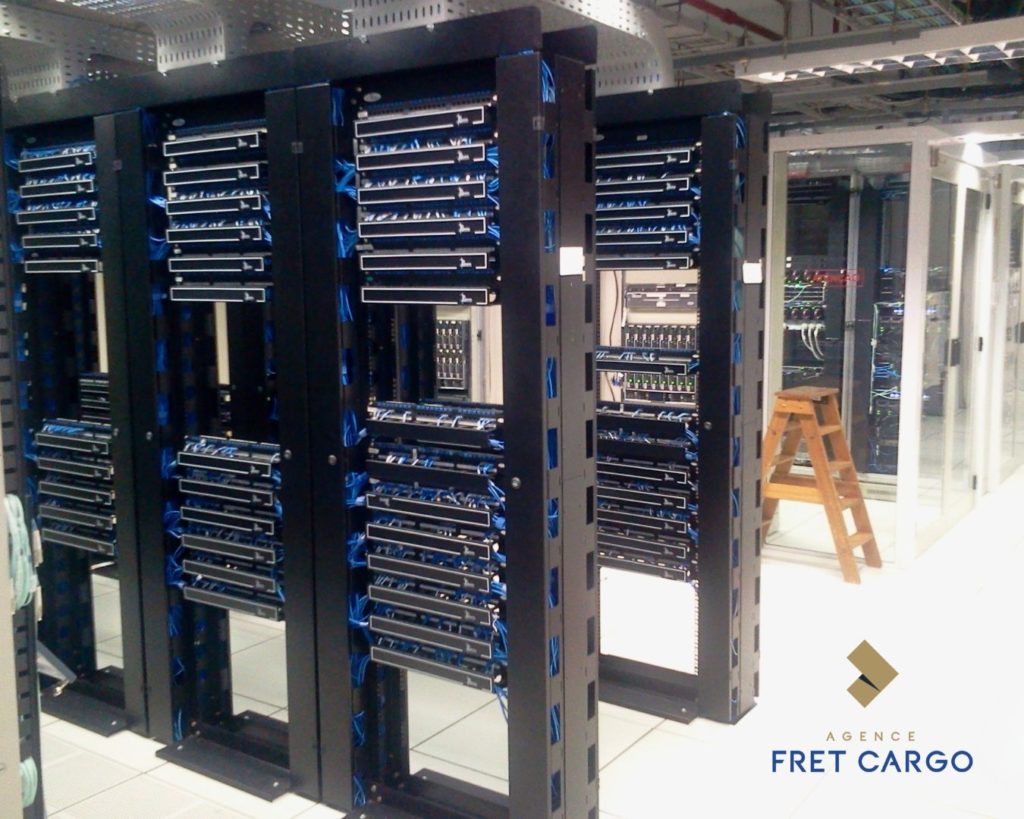
Switzerland is globally renowned as a data haven. With its strict privacy laws, political neutrality, and subterranean data centers hidden inside former military bunkers, it is the location of choice for international banks, biotech firms, and government contractors to host their most classified servers.
However, a massive vulnerability arises when this hardware needs to be relocated.
Executing the Secure Transport of IT Equipment from Switzerland is a high-stakes logistical challenge. You are not just moving metal and silicon; you are moving millions of dollars’ worth of proprietary data, intellectual property, and classified intelligence. A single hard jolt can destroy a server array, and a security breach during transit can ruin a company.
Here is the ultimate guide to moving highly sensitive IT infrastructure across Swiss borders safely and legally.
1. Physical Protection: Defending Against Shock and Static
Servers, SAN storage arrays, and network switches are incredibly fragile. When moving IT equipment out of a climate-controlled data center, physical packaging is your first line of defense.
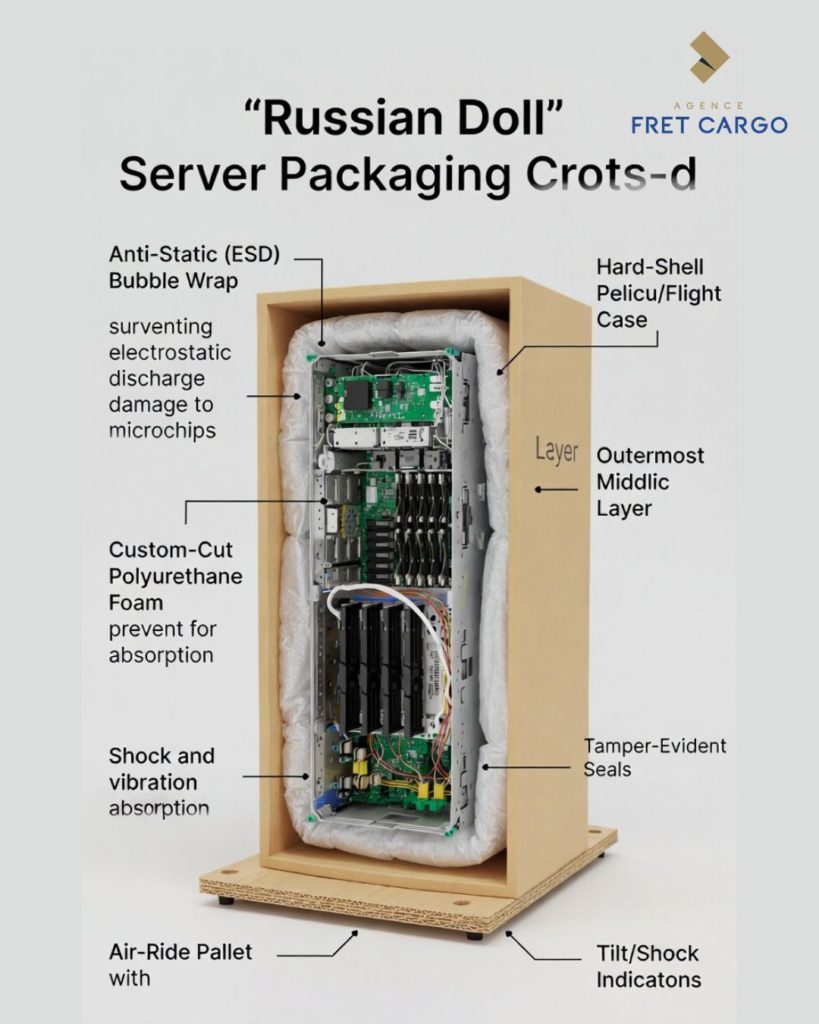
- Anti-Static Protection (ESD): Standard plastic wraps generate static electricity that can fry motherboards. All sensitive IT equipment must be wrapped in specialized Electrostatic Discharge (ESD) materials.
- Shock and Vibration Mitigation: A standard delivery truck’s suspension will vibrate delicate server pins to pieces. Classified IT transport requires Air-Ride suspension vehicles. Furthermore, hardware should be packed in custom shock-absorbing flight cases equipped with ShockWatch and TiltWatch indicators. If a box is dropped or tilted beyond a safe angle during transit, the indicator turns red, providing immediate evidence of mishandling.
2. Chain of Custody and Anti-Sabotage Security
When transporting classified servers, the threat of corporate espionage or data theft is real. The Secure Transport of IT Equipment from Switzerland requires a military-grade chain of custody.
- Tamper-Evident Sealing: Every flight case must be sealed with unique, numbered security tags. These numbers are recorded on the transport manifest and verified by the receiving IT director.
- Unmarked Vehicles and GPS Tracking: To prevent targeted theft, secure IT shipments are often moved in unmarked vehicles. The logistics team monitors the truck’s location, speed, and door-opening events in real-time via encrypted IoT GPS trackers.
- Two-Driver Protocols: For high-value classified servers, vehicles are staffed by two security-cleared drivers to ensure the cargo is never left unattended, even during refueling.
3. SECO Export Controls and “Dual-Use” Goods
Moving servers across international borders isn’t just about standard customs; it’s about national security.
Many high-end servers contain advanced encryption processors. Under Swiss and international law, strong cryptographic hardware is often classified as “Dual-Use” goods (items that can be used for both civil and military purposes).
- To export these servers from Switzerland legally, you must often obtain a specific export license from the State Secretariat for Economic Affairs (SECO).
- Failing to declare dual-use IT equipment can result in your servers being seized indefinitely by border control, causing catastrophic downtime for your network.
4. White-Glove Handover: From Rack to Rack
A true secure IT transport service doesn’t just leave a pallet on a loading dock. It requires “White Glove” handling.
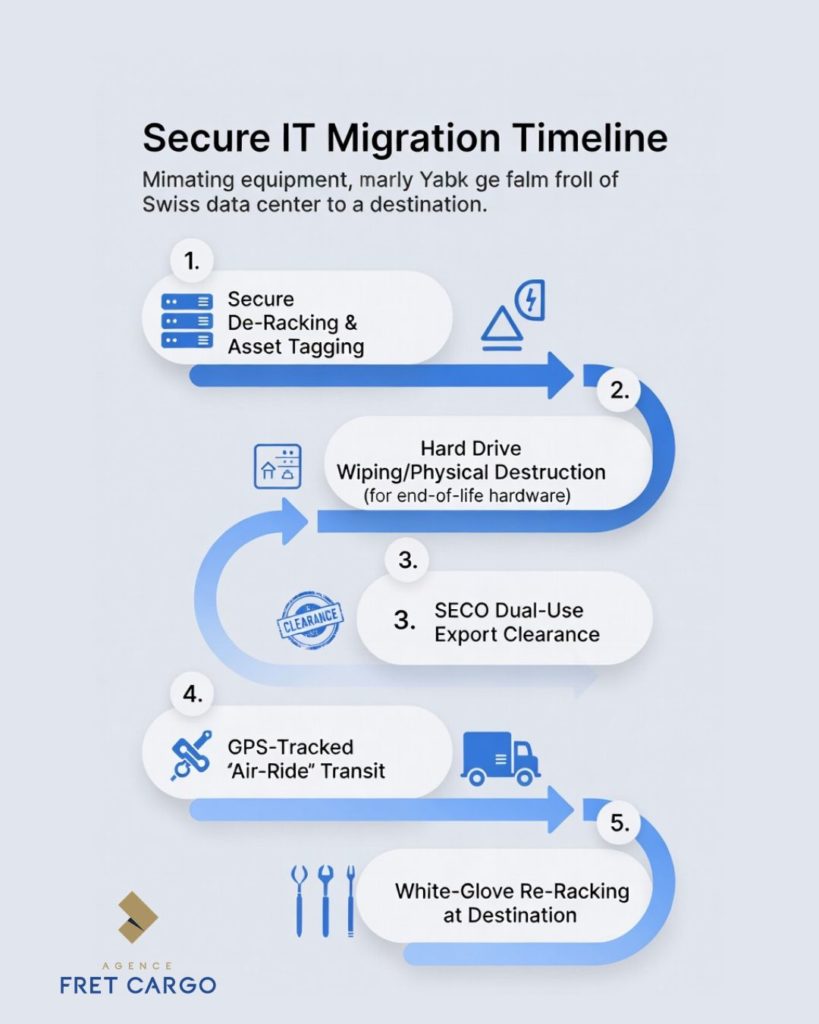
Professional IT logistics teams work alongside your network engineers to carefully de-rack the equipment in Switzerland, inventory every single cable and serial number, and re-rack it at the destination data center. If certain hard drives contain classified data that cannot leave the country, the logistics partner should also coordinate certified, on-site physical destruction of those drives before departure.
5. Why Trust Agency Fret Cargo with Your IT Infrastructure?
When you are migrating a multi-million-dollar data center, you cannot risk handing your classified servers over to a generic freight forwarder where your cargo is treated like ordinary pallets.
As a boutique logistics company based in Switzerland, Agency Fret Cargo specializes in the highest level of secure transport. We refuse to operate like the faceless mega-corporations:
- Real Human Communication: There are no automated ticketing systems or robots here. When you entrust us with your classified IT migration, you are given a direct line to a dedicated logistics expert who understands both the technical fragility of servers and the strict legalities of Swiss data export.
- Live Problem Solving: Customs delays or severe weather can threaten an IT migration timeline. Our team monitors your cargo 24/7 and fixes problems live on the ground – whether that means re-routing a specialized air-ride truck or liaising directly with customs officials to clear dual-use goods.
- Highly Accommodative: We understand that IT migrations usually happen during tight weekend windows to minimize network downtime (often from Friday midnight to Sunday morning). We are highly accommodative to your specific schedule, security clearance requirements, and exact engineering protocols.
Conclusion
The Secure Transport of IT Equipment from Switzerland is a complex matrix of physical engineering, cybersecurity protocols, and strict export laws. By utilizing specialized shock-absorbing packaging, maintaining an unbroken chain of custody, and navigating SECO export regulations accurately, you can ensure your data arrives safely. Above all, partnering with a dedicated, human-first logistics expert guarantees that your classified hardware is treated with the precision and respect it demands.
Planning a critical data center migration or server relocation?
Contact Agency Fret Cargo Today for a Secure IT Transport Consultation