

When Your Collection Arrives Late, the Season Doesn’t Wait
In the fashion industry, timing is not a convenience – it is the product itself. A winter coat that arrives in January instead of October is no longer a full-price item; it is a markdown candidate. A spring-summer collection that misses its launch window by even two weeks can lose up to half its revenue potential before a single customer walks through the door.
For fashion brands, retailers, and textile importers operating in or through Switzerland, the stakes have never been higher. Global supply chains have been battered by a cascade of disruptions – from the Red Sea shipping crisis to the 2026 Middle East conflict – and the consequences are landing squarely on the balance sheets of companies that depend on precise seasonal delivery windows.
This article examines the real, often underestimated costs of delayed textile imports and explains how express routing through a specialized freight partner can protect your margins, your brand, and your competitive position.
The Scale of the Problem: Fashion’s $1 Trillion Markdown Crisis
The fashion industry operates on one of the tightest seasonal calendars of any consumer sector. Collections are designed 6 to 12 months in advance, production is scheduled around narrow windows, and retail floor plans are locked in weeks before goods arrive. When textiles or finished garments arrive late, the entire chain collapses.
According to Boston Consulting Group, fashion retailers worldwide invest more than $1 trillion annually in markdown programs — discounting products that did not sell at full price during their intended season [1]. The U.S. National Retail Federation estimates that markdowns alone account for up to 12% of lost margin every year [2]. These are not theoretical losses. They represent real revenue that evaporates because products were not on shelves when consumers were ready to buy.
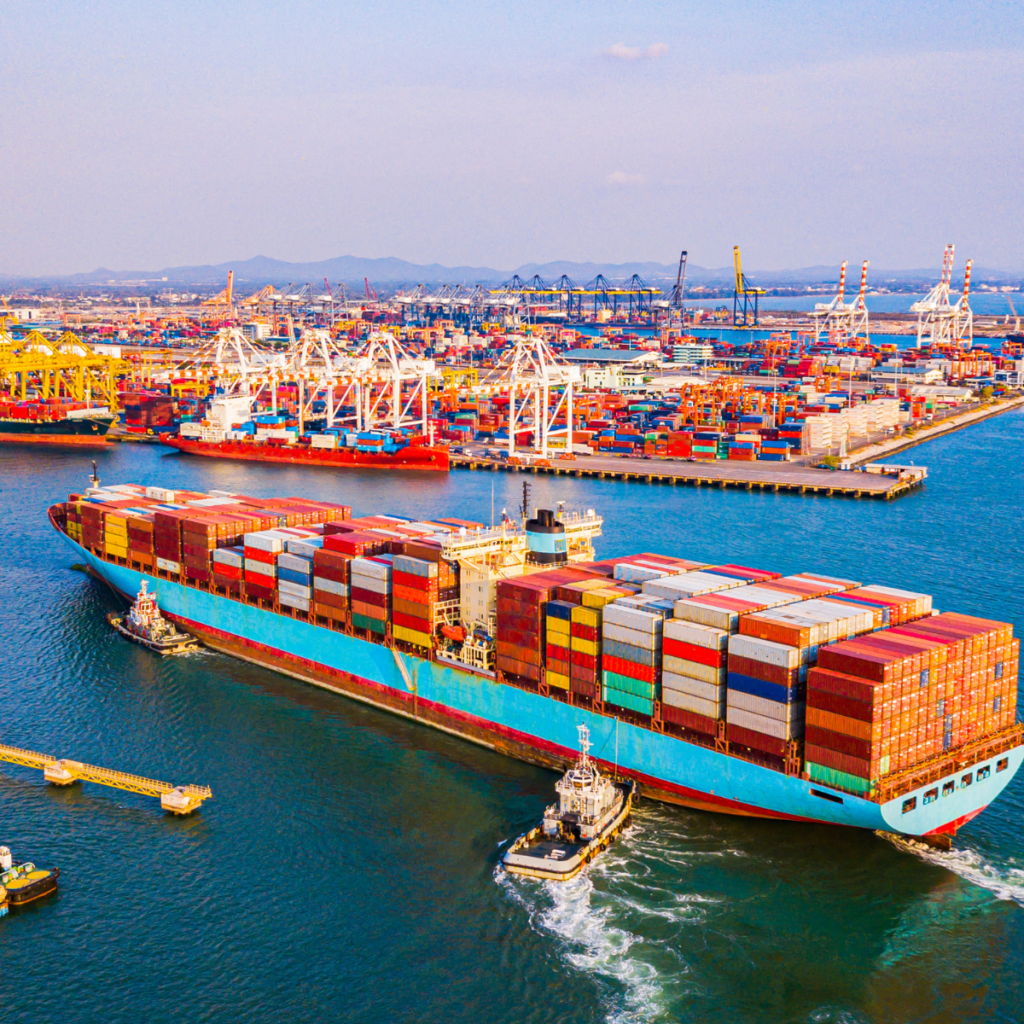
The root cause is often not poor design or weak demand. It is logistics. A shipment delayed by 7 to 14 days can push an entire collection past its optimal selling window, forcing brands into aggressive discounting just to clear inventory.
The 2026 Reality: Geopolitical Disruptions Are Making It Worse
If the past few years have taught the fashion industry anything, it is that supply chain stability is an illusion. The disruptions are not slowing down — they are accelerating.
In March 2026, the escalation of conflict in the Middle East forced major shipping lines including Maersk, MSC, CMA CGM, and Hapag-Lloyd to suspend transit through the Strait of Hormuz. Routes were diverted around the Cape of Good Hope, adding 7 to 14 days to delivery times for goods moving between Asia and Europe . Shipping lines immediately imposed surcharges of $1,500 to $4,000 per container, and insurance companies activated force majeure clauses, further inflating costs [3].
For the fashion sector, the timing could not have been worse. The spring-summer campaign – the industry’s peak selling period – was already underway. Reuters reported that garments for major retailers including Inditex (Zara) were stranded at airports in Bangladesh and India, unable to reach European markets [4] . Research firm Altana found that Red Sea disruptions affect 79% of Europe’s apparel imports from Asia [5].
The financial markets reacted immediately. In the trading session following the escalation, Inditex shares fell 4.8%, LVMH dropped 4.3%, Kering fell 5%, and Moncler declined more than 6% . These are not abstract numbers — they reflect the market’s understanding that late deliveries translate directly into lost revenue.
The Five Hidden Costs That Most Brands Underestimate
When a textile shipment is delayed, the invoice from the freight company is only the beginning. The true cost is far larger and often invisible until it is too late.
Forced Markdowns and Margin Erosion
This is the most direct and devastating cost. A product that arrives two weeks late has already lost a significant portion of its full-price selling window. Retailers are forced to discount earlier and deeper. Industry data shows that markdowns averaging 25% to 35% are common when inventory arrives off-cycle . For a brand shipping $500,000 worth of textiles per season, a 30% markdown on even half that inventory represents $75,000 in lost margin — per shipment.
Emergency Air Freight Premiums
When sea freight is delayed, the instinctive reaction is to switch to air. But this comes at a steep price. Air freight for textiles typically costs 3 to 5 times more than ocean shipping . A container that costs $2,000 by sea can cost $8,000 to $12,000 by air. For brands already operating on thin margins, this emergency spend can wipe out the profitability of an entire collection [7].
Retail Partner Penalties and Lost Shelf Space
Major retailers — department stores, multi-brand boutiques, and e-commerce platforms — operate on strict delivery schedules. A late shipment does not just mean a delayed product; it can trigger contractual penalties, chargebacks, and even loss of shelf space for future seasons. In the competitive world of fashion retail, a brand that misses its delivery window once may not get a second chance.
Brand Reputation and Consumer Trust Erosion
Trust is one of the hardest-earned assets a fashion brand possesses. A study of 7,000 companies found that 54% experienced a drop in trust due to operational failures, leading to combined revenue losses of over $180 billion – an average of $25.7 million per company . In fashion, where brand perception is everything, a missed seasonal launch sends a signal to buyers and consumers alike: this brand cannot deliver.
Cascading Inventory Distortion
Late arrivals do not just affect the current season. They create a ripple effect. Unsold spring inventory occupies warehouse space meant for summer goods. Summer goods are then delayed, and the cycle repeats. Over time, this inventory distortion leads to chronic overstock, increased warehousing costs, and a perpetual cycle of markdowns that erodes the brand’s pricing power.
Why Standard Freight Forwarding Falls Short for Fashion
Most general freight forwarders treat textiles like any other commodity — they optimize for cost per kilogram, not for seasonal timing. This approach is fundamentally misaligned with the fashion industry’s needs.
The fashion supply chain requires a logistics partner that understands three critical dimensions.
| Dimension | What Fashion Needs | What Generic Forwarders Offer |
| Speed | Guaranteed delivery within a narrow seasonal window, with express options when disruptions occur. | Standard transit times with no urgency protocols. |
| Customs Expertise | Rapid clearance of textiles, which face complex tariff classifications, origin documentation, and quota restrictions. | Generic customs processing that treats textiles like industrial goods. |
| Proactive Communication | Real-time visibility and early warning when a shipment is at risk, with pre-arranged contingency routes. | Reactive updates after delays have already occurred. |
For brands importing textiles into or through Switzerland — a major hub for luxury fashion, watchmaking, and high-end retail — the customs dimension is particularly critical. Swiss customs procedures for textiles involve specific tariff codes, origin certifications, and potential preferential trade agreements that require specialized knowledge.
How Express Routing Through Geneva Solves the Problem
Agence Fret Cargo, headquartered at Geneva Airport since 1988, has built its textile logistics practice around one principle: your collection must arrive on time, every time, regardless of what is happening in global shipping lanes.
Here is how express routing through a specialized Swiss freight partner changes the equation.
Pre-Positioned Contingency Routes
Rather than reacting to disruptions after they occur, Fret Cargo maintains pre-arranged express routing options through its network of over 5,000 trusted agents worldwide. When a sea freight route is compromised — whether by Red Sea diversions, port congestion, or geopolitical events — the switch to air or multimodal transport is executed immediately, not after days of deliberation.
Geneva Airport: A Strategic Customs Hub
Geneva Airport is not just a passenger hub; it is one of Europe’s most efficient cargo clearance points. Fret Cargo’s on-site customs team manages both standard and specialized textile clearance procedures directly at the airport, eliminating the delays that occur when goods must be transferred to off-site customs brokers. For over 30 years, this team has handled the specific tariff classifications, origin documentation, and preferential trade certifications that textile imports require.
Express Import Capabilities
Fret Cargo specializes in express import services for textiles — from raw fabrics and specialty yarns to finished garments and accessories. This includes express handling for time-critical sample shipments (essential for collection approvals and buyer presentations) as well as bulk seasonal deliveries. The goal is to reduce lead times from weeks to days when the situation demands it.
End-to-End Visibility and Proactive Alerts
Every textile shipment is tracked in real time. When a potential delay is detected — whether due to weather, customs holds, or carrier issues — the Fret Cargo team alerts the client and activates contingency measures before the delay impacts the delivery window. This proactive approach is the difference between a minor logistical adjustment and a missed season.
The ROI of Getting It Right: A Practical Example
Consider a mid-sized Swiss fashion brand importing $400,000 worth of spring-summer textiles from Southeast Asia.
| Scenario | Standard Sea Freight (Delayed) | Express Routing via Fret Cargo |
| Transit Time | 35-49 days (with 7-14 day delay from rerouting) | 5-10 days (air) or 28 days (optimized multimodal) |
| Freight Cost | $8,000 + $3,000 surcharge = $11,000 | $18,000 (express air) |
| Markdown Loss | 30% on 50% of inventory = $60,000 | Minimal — collection arrives on time |
| Retail Penalties | $5,000 – $15,000 in chargebacks | $0 |
| Net Cost of Delay | $76,000 – $86,000 | $18,000 |
The math is clear. The “cheaper” shipping option costs 4 to 5 times more when you account for the hidden costs of delay. Express routing is not an expense — it is margin protection.
Conclusion: In Fashion Logistics, Speed Is Not a Luxury — It Is a Margin Strategy
The fashion industry will continue to face supply chain disruptions. The Middle East conflict, Red Sea diversions, tariff volatility, and port congestion are not temporary inconveniences — they are the new normal. Brands that treat logistics as a cost center to be minimized will continue to lose margin to markdowns, penalties, and missed seasons.
The brands that win will be those that treat logistics as a strategic investment — partnering with specialized freight forwarders who understand that in fashion, a day late is a dollar lost.
Agence Fret Cargo has been helping fashion brands, textile importers, and luxury houses navigate complex global supply chains from Geneva since 1988. Whether you need express air freight for an urgent sample shipment or a resilient multimodal strategy for your next seasonal collection, our team is ready to help.
Ready to protect your next seasonal launch? Request a free logistics assessment or call us at +41 22 798 68 00.
References
[1] [The Advanced Analytics Behind Fashion Company Markdowns — BCG]
[2] [The Holiday Markdown Dance — Vistex / NRF]
[4] [Fast Fashion Garments Pile Up in South Asia as Middle East Conflict Grounds Planes — Reuters]
[5] [Red Sea Disruption Affects 79% of Europe Apparel Imports from Asia — Altana]
[6] [A Comprehensive Guide to Effective Markdown Optimization — o9 Solutions]
[7] The Cost of Production Delays for Apparel and Fashion Retailers — Inspectorio