
The start of the autumn season this year presents a particularly complex paradox for international logistics players and Swiss importers. On one hand, spot rates on major shipping routes connecting Asia to Europe are beginning a notable decline, offering unexpected financial opportunities. On the other, congestion in the huge seaports of Northern Europe is reaching unprecedented peaks, blocking massive volumes of goods. For logistics managers and industrial SMEs, this situation transforms supply chain management into a real obstacle course where delays accumulate dangerously, threatening the continuity of business operations and end-customer satisfaction.
Founded in 1988 and operating directly from Geneva airport, Agence Fret Cargo puts its 38 years of experience at the service of businesses to navigate through these complex global disruptions. We design bespoke bypass strategies and agile transport plans, allowing you to secure your goods flows. Our personalised approach ensures that your imports reach their final destination in the best possible conditions, transforming current logistics challenges into real competitive advantages for your company.
1. Current challenges of Swiss sea freight
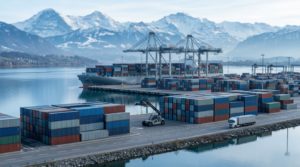
The global container transport market is going through a period of high volatility that requires constant attention. Although shipping costs from major Asian production hubs are experiencing a welcome lull with a decrease in spot rates, Northern European port infrastructures are literally saturated. Terminal congestion drastically slows down the unloading of giant ships, creating major bottlenecks that reverberate across the entire continent.
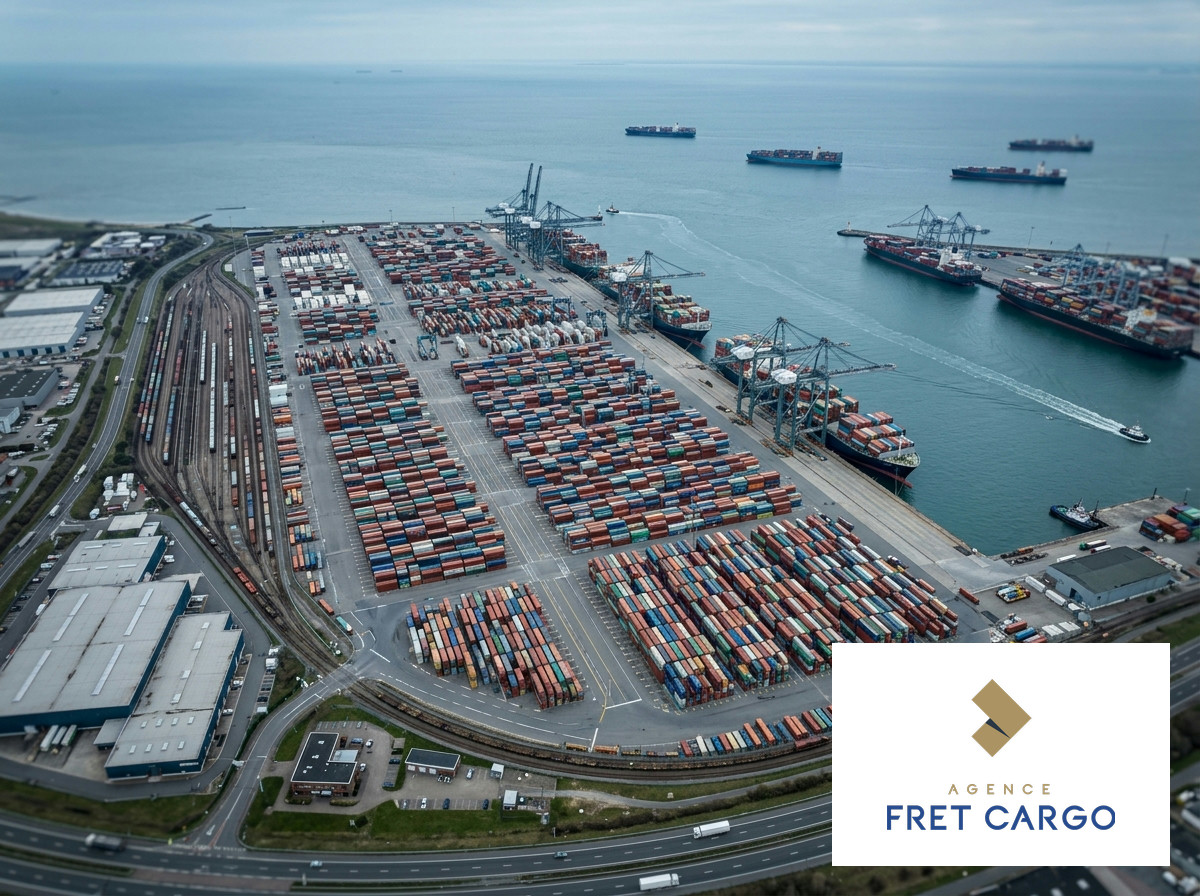
These massive delays accumulated on the docks disrupt the entire distribution logistics chain. Importers must therefore urgently rethink their traditional routing plans to prevent port congestion from blocking their strategic stocks for several days, or even many weeks. Such paralysis ties up cash flow and delays the time to market for products.
In this extremely tense context, organising efficient Swiss sea freight requires moving away from routine patterns. It becomes imperative to analyse bottlenecks in real time and adopt a proactive approach, capable of anticipating blockages even before the goods leave their port of origin in Asia.
2. The strategic alternative: the South route via Genoa
Faced with persistent blockages in historic maritime hubs like Antwerp, Rotterdam or Hamburg, diverting logistics flows to southern Europe stands out as a highly favoured tactic. Italian ports, and more specifically the Ligurian terminals, offer a significantly less congested and geographically very coherent maritime gateway to quickly reach French-speaking Switzerland.

By resolutely opting for the South route via Genoa, goods benefit from a much smoother unloading and handling process. This major geographical alternative not only avoids northern saturation, but also promotes direct transit to Alpine rail and road infrastructures.
Furthermore, this strategic reorientation often allows you to take advantage of attractive tariff reductions specific to these Mediterranean shipping corridors. Swiss companies can thus optimise their overall import costs while significantly reducing the uncertainties linked to unpredictable delivery times from Northern Europe.
3. Comparison of routes for your imports
To better understand the fundamental impact of routing choice on the overall performance of your supply chain, it is essential to methodically analyse the different geographical options available. Evaluating the main transit routes allows you to make informed decisions tailored to the criticality of your goods.
| Logistics evaluation criterion | North Route (Rotterdam / Antwerp) | South Route (Genoa / Mediterranean) |
|---|---|---|
| Terminal congestion level | Very high, frequent unloading delays | Generally moderate, smoother container flows |
| Risk of pre-carriage blockage | High (strong dependence on Rhine water levels) | Low (direct Alpine rail and road connection) |
| Adaptation to flows towards French-speaking Switzerland | Complex and slowed down during periods of high saturation | Very relevant, fast and geographically direct |
This table clearly demonstrates the undeniable competitive advantage of diversifying your continental entry points during a logistics crisis. If you are still hesitating about the most suitable global shipping method for your commercial goods, you can consult our detailed comparative analysis: Sea vs Air Freight: Which is the most advantageous?.
4. Logistics innovation: Sea-Air hybrid offers
When full sea transport proves too uncertain in the face of port delays, and pure air freight exceeds the allocated budget, hybrid offers emerge as a formidable intermediate solution. The Sea-Air concept intelligently combines the best of both worlds to offer a perfect balance between cost control and speed of execution.
In practical terms, this method involves routing containers by sea from Asia to a strategic intermediate hub, such as Dubai. Once there, the goods are quickly transferred to airport terminals to be shipped by air directly to Geneva airport, thus completely avoiding congested European ports.
This multimodal solution is particularly recommended for medium-urgency goods, such as seasonal fashion collections or electronic components. It guarantees a regular supply to the Swiss market while bypassing traditional maritime congestion zones.
5. Favouring intermodal rail and road solutions
Once the containers are unloaded from the ship, overland pre-carriage constitutes the second decisive test of transport. Traditionally, river transport on the Rhine is widely favoured by importers, but it is currently suffering from considerable delays linked to a lack of barges, congested infrastructures and climatic hazards affecting water levels.
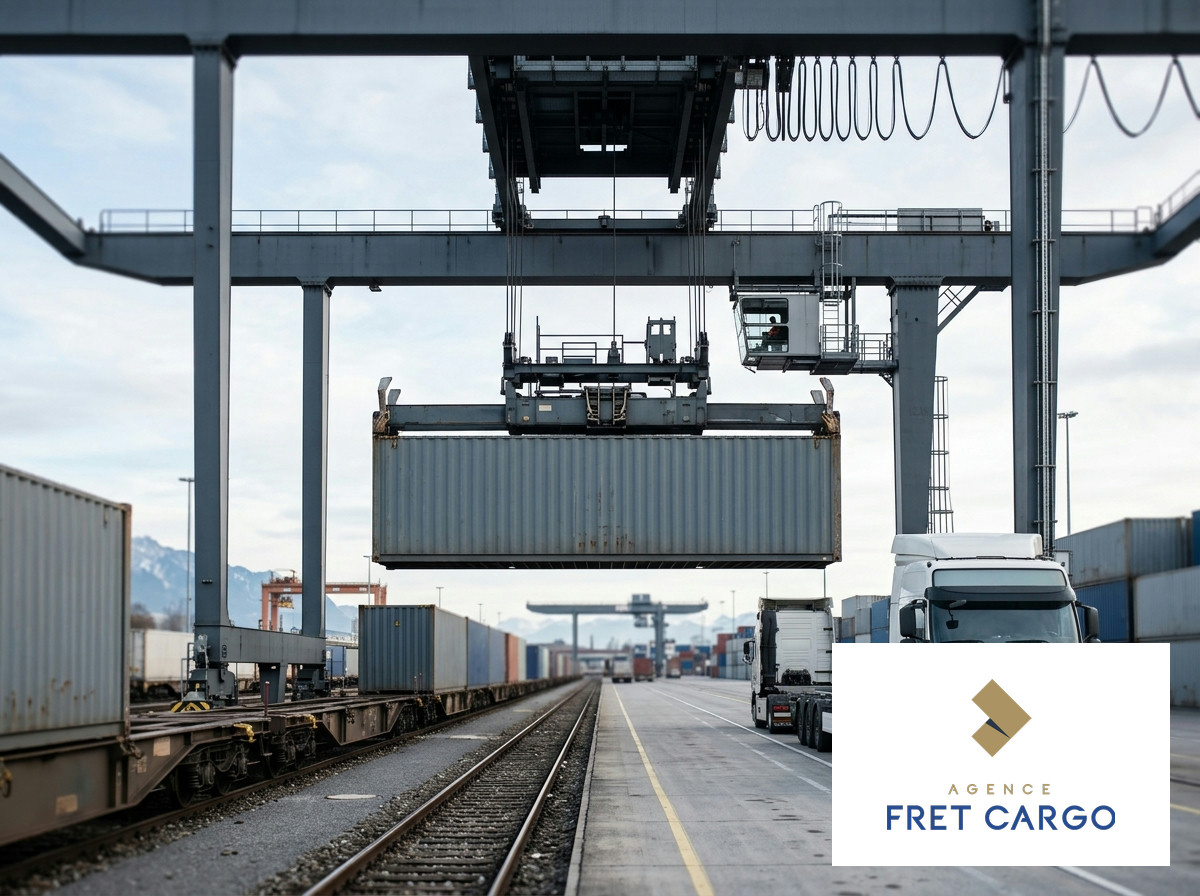
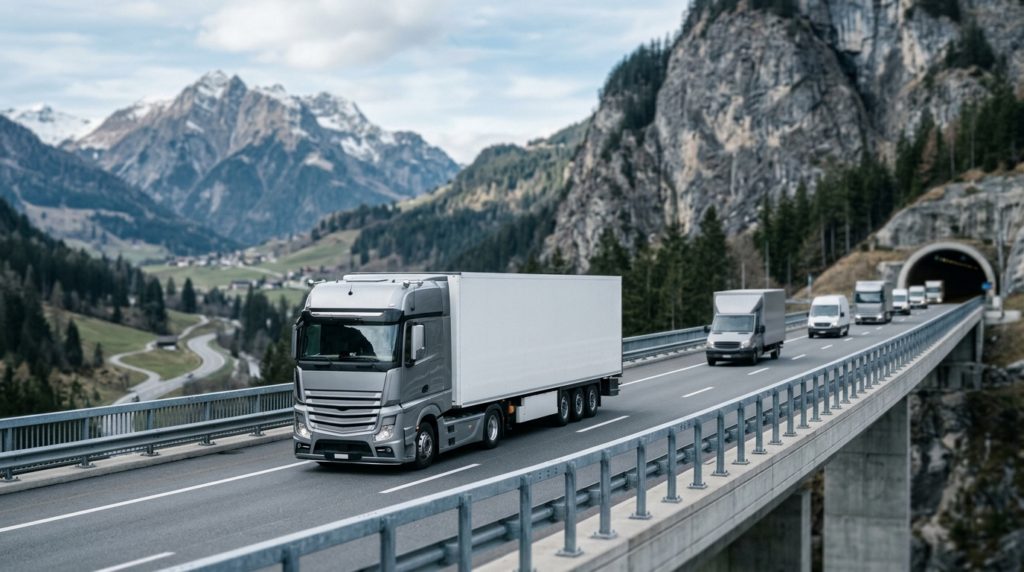
To compensate for these river transport failures, the massive use of intermodal solutions is establishing itself as the standard for reliability. Combining high-capacity rail transport through the Alpine tunnels with targeted road delivery for the last mile guarantees vastly superior punctuality and better resilience to unforeseen events.
This hybrid rail-road approach secures the physical transit of goods and maintains the strict pace of your industrial supplies. Furthermore, it is part of an environmental sustainability approach, significantly reducing the overall carbon footprint of overland transport to the Swiss cantons.
6. Pre-customs clearance and customs fluidity to Switzerland
The physical speed of transport across Europe must imperatively be accompanied by rigorous administrative anticipation. The expert use of the computerised customs transit system allows the pre-customs clearance of goods to be initiated even before they cross the physical Swiss border, thus eliminating bureaucratic friction.
According to the general guidelines of the Federal Office for Customs and Border Security, an early and perfectly compliant electronic declaration eliminates prolonged and costly waiting times at border terminals. It is an essential administrative lever to maximise the efficiency of any Swiss sea freight.
Ultimately, the resilience of your import logistics depends on your ability to bypass traditional bottlenecks. By combining intelligent alternative routes like the southern route, robust overland intermodal solutions and highly proactive customs management, you preserve your company's competitiveness. This overall strategic agility is the surest bulwark to maintain a constant and controlled supply flow in the face of global trade turbulence.
Contact Agence Fret Cargo
📍 Voie-des-Traz 20, 1215 Le Grand-Saconnex (Geneva Airport) 📞 +41 22 798 68 00 📧 hello@fretcargo.com
Any rates and transit times mentioned are indicative market estimates, subject to final confirmation based on your shipment details, the commodity, and current market conditions.
Let us handle the logistics — you focus on your business.