
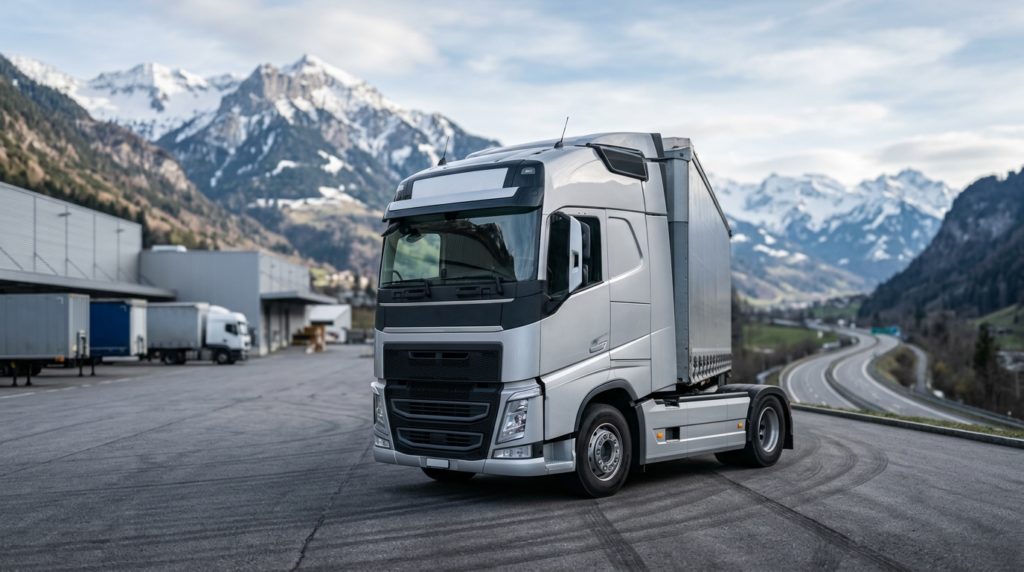
Logistics directors and Swiss SMEs are currently facing a major challenge: the staggering rise in diesel prices in Europe. Averages are reaching historically high levels, with particularly sharp peaks in key transit countries like Germany, as well as in Switzerland. This energy price surge directly impacts carriers’ tariff grids, threatening the financial balance of import-export operations. In this volatile context, controlling the road transport fuel surcharge becomes an absolute priority to preserve the profitability of your goods flows and maintain the competitiveness of your supply chain on the European market.
To navigate smoothly through this pricing turbulence, a proactive approach is essential. By continuously analysing European market fluctuations, logistics experts can design resilient transport strategies capable of bypassing unforeseen increases and securing budgets in the long term.
1. Understanding the impact of the road transport fuel surcharge
The increase in pump prices profoundly alters the structure of logistics costs. Historically, fuel represented a predictable fraction of the shipping budget, but recent geopolitical and economic upheavals have transformed this expense into a highly unstable variable. Carriers, faced with an explosion in their operating costs, have no choice but to adjust their rates in real time.
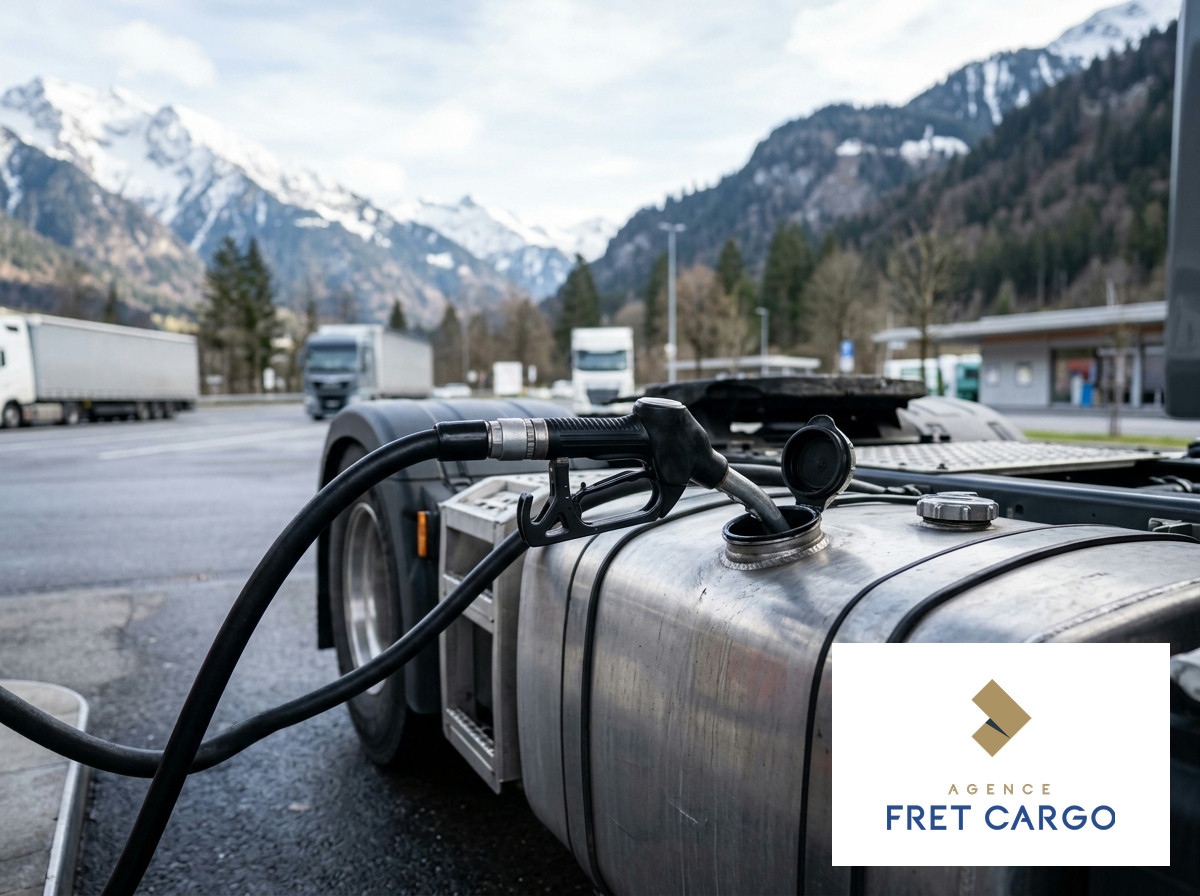
Today, these professionals logically pass on this increase via a strict indexation mechanism. This road transport fuel surcharge is added to the base rate and often fluctuates monthly, or even weekly during crisis peaks. For Swiss exporting companies, the resulting budgetary uncertainty greatly complicates the pricing of finished products destined for the European Union market. Without a proactive optimisation strategy, your profit margins risk eroding very quickly under the growing weight of these incompressible additional costs.
2. Strategic optimisation of cross-border routes
The geography of fuel prices in Europe is extremely heterogeneous. Careful planning of the routes taken by heavy goods vehicles allows for substantial savings. In the current context, it is no longer just about finding the shortest path in kilometres, but rather identifying the most globally cost-effective corridor.
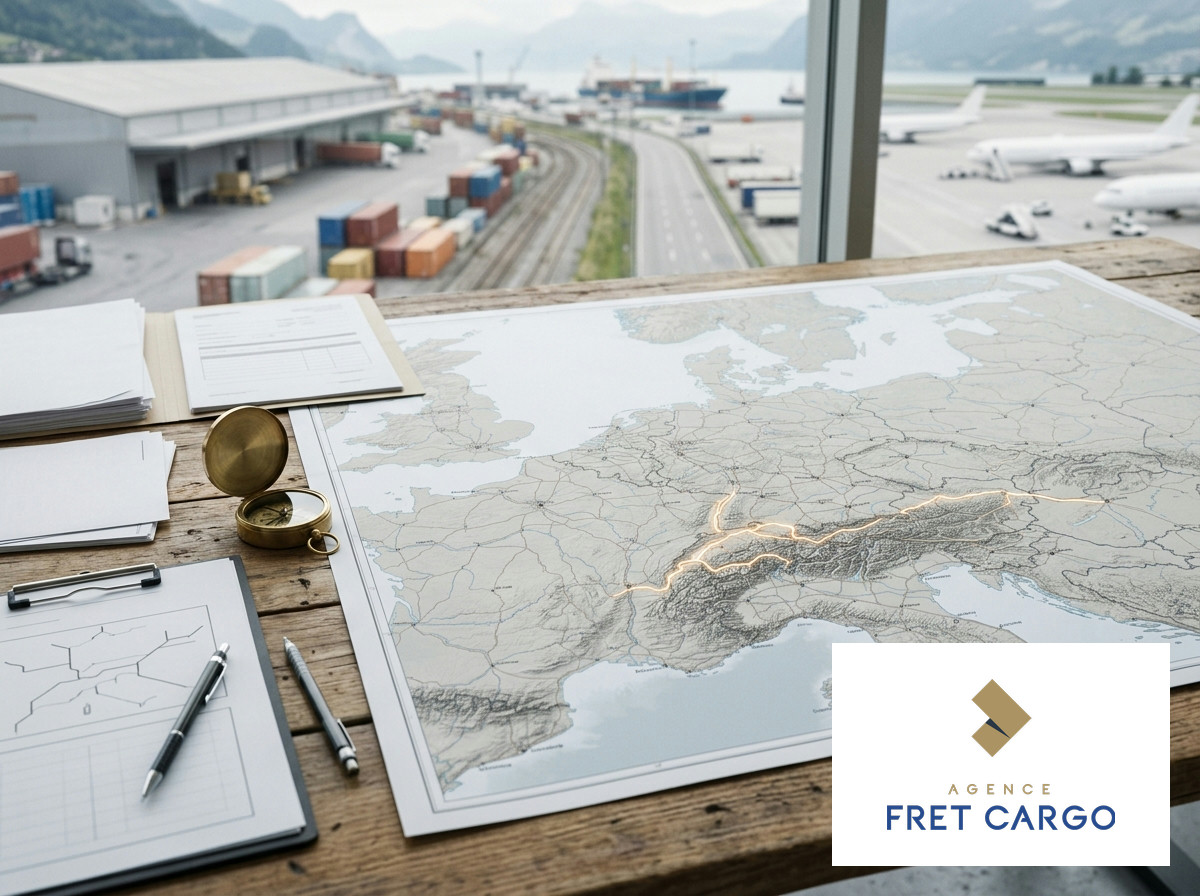
At Agence Fret Cargo, we study routes to carefully avoid geographical areas where taxes and diesel prices reach peaks. By adjusting border crossing points and coordinating refuelling stops in more fiscally lenient regions, it is entirely possible to dilute the impact of the rate increase. This route engineering requires in-depth knowledge of European infrastructures and legislation, a complex subject that we cover in more detail in our guide dedicated
3. Using combined rail-road transport to bypass the crisis
When European roads become too expensive due to diesel prices and tolls, modal shift stands out as a leading strategic alternative. Combined rail-road transport allows you to intelligently bypass the volatility of hydrocarbons while maintaining excellent service quality.
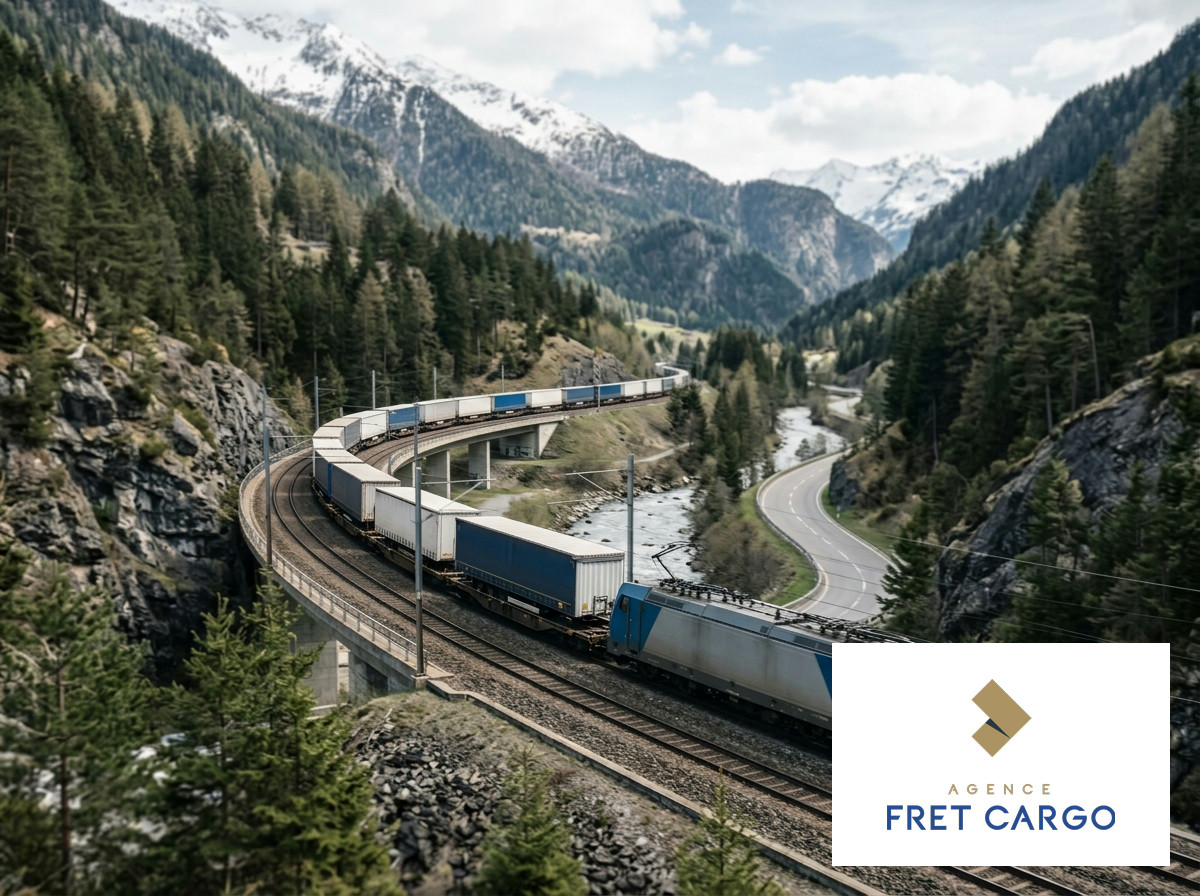
By placing trailers or containers directly on wagons to cover long distances across Europe, you drastically reduce the overall diesel consumption of your supply chain. The lorry is then only used for pre-carriage and on-carriage over very short local journeys. This method not only avoids heavy European road taxes, but it also offers a significantly lower carbon footprint. The Swiss federal administration, notably through the Federal Office for the Environment, actively encourages these sustainable logistics solutions for the future of freight.
4. Comparison: Classic road transport vs Combined rail-road
To better visualise the advantages and limitations of each logistics solution in the face of the current energy crisis, here is a comparison table highlighting the essential evaluation criteria for Swiss SMEs and logistics directors.
| Evaluation criterion | Classic road transport | Combined rail-road transport |
|---|---|---|
| Exposure to fuel prices | Very high (direct and rapid indexation) | Low (majority electric rail traction) |
| Departure flexibility | Maximum (direct door-to-door service) | Dependent on railway timetable planning |
| Transit taxes and tolls | Strong impact on long international journeys | Significantly reduced or totally avoided |
| Ecological footprint | Significant CO2 emissions | Solution recognised as highly sustainable |
This comparison table clearly demonstrates that while road offers unparalleled flexibility for emergencies, rail becomes a particularly effective logistics shield to stabilise your budgets on major international routes, far from oil fluctuations.
5. Negotiating stable contracts to avoid volatility
The spot market for road freight transport is inherently extremely volatile. In times of energy crisis or geopolitical tensions, relying exclusively on ad hoc transport purchases exposes your company to violent price fluctuations that you can neither anticipate nor control.
To secure your import-export flows, setting up long-term contracts incorporating ‘all-in’ (all-inclusive) pricing proves particularly judicious. Agence Fret Cargo negotiates solid framework agreements with carriers for you, allowing market variations to be smoothed out. Although a fuel review clause may legitimately exist, these structured contracts offer essential financial visibility. They effectively protect you against sudden rises in the free market and greatly facilitate the annual budget forecasting of your logistics department.
6. Securing the future of your shipments from Switzerland
The uncertain evolution of the energy sector in Europe requires Swiss companies to fundamentally rethink their distribution models. Faced with these structural challenges, there is no single miracle solution, but rather a package of preventive measures to be combined intelligently. From the rigorous optimisation of road flows to the diversification of transport modes via rail, every logistics lever counts to maintain competitive international rates.
By anticipating these challenges with an expert partner, you transform a major external constraint into a real competitive advantage in your market. The agility of your supply chain in the face of the road transport fuel surcharge will define your ability to win and retain new customers in Europe in a completely profitable and sustainable manner.
Contact Agence Fret Cargo
📍 Voie-des-Traz 20, 1215 Le Grand-Saconnex (Geneva Airport) 📞 +41 22 798 68 00 📧 hello@fretcargo.com
Any rates and transit times mentioned are indicative market estimates, subject to final confirmation based on your shipment details, the commodity, and current market conditions.
Let us handle the logistics — you focus on your business.