

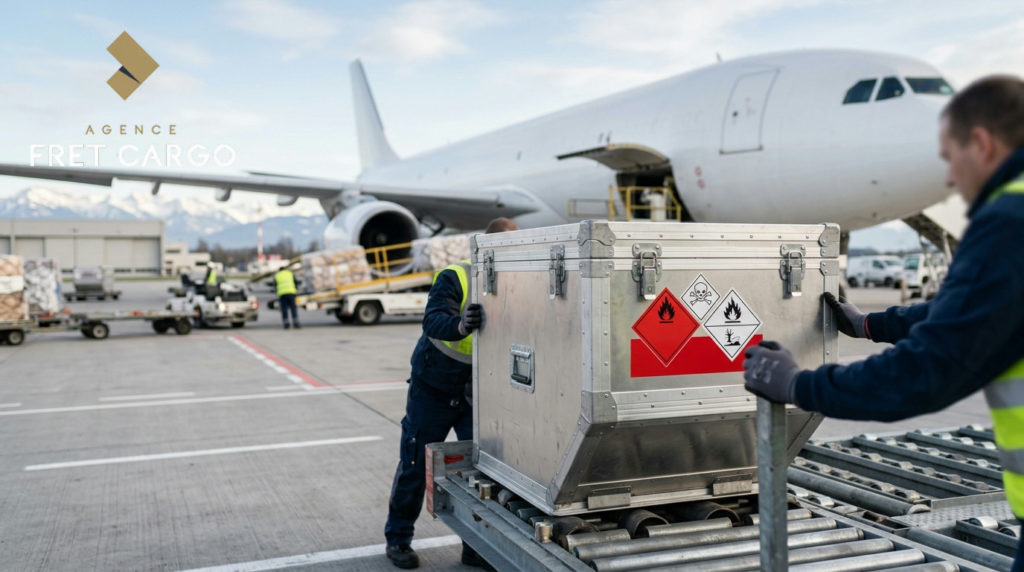
The transport of dangerous goods by air represents one of the most complex challenges for international logistics players. Subject to draconian standards, these shipments require absolute precision to guarantee the safety of flights, crews, and infrastructure. As freight forwarders and logisticians, you know that the slightest packaging or documentation error can lead to the immediate blocking of the goods, or even severe sanctions from the competent authorities. It is therefore imperative to thoroughly master the imposed regulatory framework to streamline your supply chain and avoid costly delays.
Founded in 1988, Agence Fret Cargo is a Swiss family-owned freight forwarding company based directly at Geneva airport. With 38 years of experience, we position ourselves as a true craftsman of international freight transport, with a personalised approach for a demanding clientele. Members of SpedLogSwiss and the Global Affinity Alliance (GAA) network, we are accredited by the International Air Transport Association (IATA), including for the freight of dangerous goods. Our expertise allows us to support professionals by securing every step of these particularly sensitive shipments.
1. Understanding IATA regulations and hazard classes
The shipment of sensitive materials by air is governed by a strict manual updated annually, which defines the universal rules for acceptance and handling. This framework classifies products into several distinct categories, depending on the nature of the risk they pose at altitude, in the face of pressure and temperature variations.
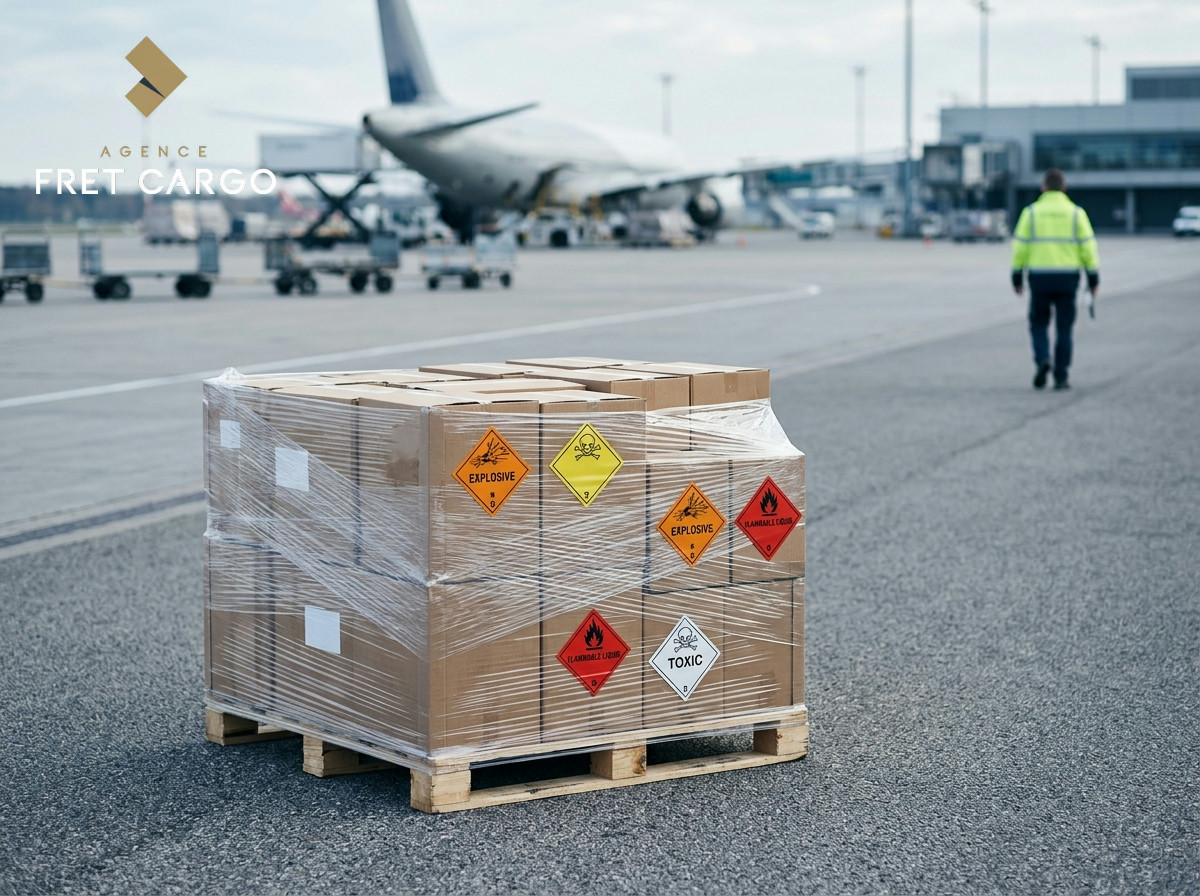
Among the listed classes are seemingly common but highly regulated items. Explosives, gases and gas mixtures, flammable liquids and solids, or toxic and infectious substances are included. It is crucial to correctly identify batteries, including those for wheelchairs, gas cartridges for camping stoves, certain car parts or medical supplies, as well as radioactive or corrosive materials. Finally, environmentally hazardous substances also require specific formalities, specialised handling, and secure logistics, as stipulated by the IATA guidelines.
2. The freight forwarder's responsibility in the supply chain
In the context of air freight, the freight forwarder plays an essential filter role between the initial shipper and the airline. The responsibility for verifying the accuracy of declarations rests largely on our teams. We must ensure that the goods presented correspond scrupulously to what is declared.
Even before a shipment reaches the terminal, we audit the exact nature of the product. An omission, even involuntary, concerning hidden dangerous goods can compromise the overall safety of a flight. This is why we recommend always integrating a rigorous examination from the planning phase of your logistics, relying on experts who perfectly master [Air Freight](air-freight) to audit your shipments upstream.
3. Comparison: Dangerous goods vs Standard freight
To better understand the logistical implications and anticipate operational constraints, it is necessary to analyse the fundamental differences between a standard shipment and the dispatch of regulated products.
| Logistics criterion | Standard freight | Dangerous goods |
|---|---|---|
| Required documentation | Standard AWB, commercial invoice, and packing list | AWB, Shipper's Declaration (DGD), Safety Data Sheets (SDS) |
| Packaging requirements | Standard carton or pallet adapted to the weight | UN-approved packaging, resistance tests, mandatory specific marking |
| Control procedures | Routine X-ray security inspection | Thorough verification (IATA checklist) before any acceptance into the warehouse |
| Handling rules | General handling without major restrictions | Strict separation of incompatible materials, dedicated storage areas |
4. The challenges of packaging and documentation
The packaging of dangerous goods cannot be improvised and constitutes one of the pillars of aviation safety. It must imperatively meet United Nations standards, which impose rigorous drop and stacking tests. Packaging must be able to withstand the extreme conditions encountered in the hold. Furthermore, hazard labels must be affixed visibly, unalterably, and never be obscured by adhesive tape or other documents.
On the documentary level, the Shipper's Declaration for Dangerous Goods (often called DGD) is the centrepiece of the file. This document legally binds its signatory regarding the absolute compliance of the shipment. It must precisely detail the UN number of the substance, the proper shipping name, the primary and subsidiary hazard class, as well as the packing group. The slightest erasure, unvalidated alteration, or typing error leads to outright rejection by the airline agents at the time of acceptance.
5. Customs expertise and handling at Geneva airport
Operating directly from the Geneva tarmac offers a considerable strategic advantage for managing urgent and sensitive shipments. Each air shipment is covered by an Air Waybill (AWB) with a unique number, issued by the airline or the freight forwarder, which ensures rigorous end-to-end tracking.
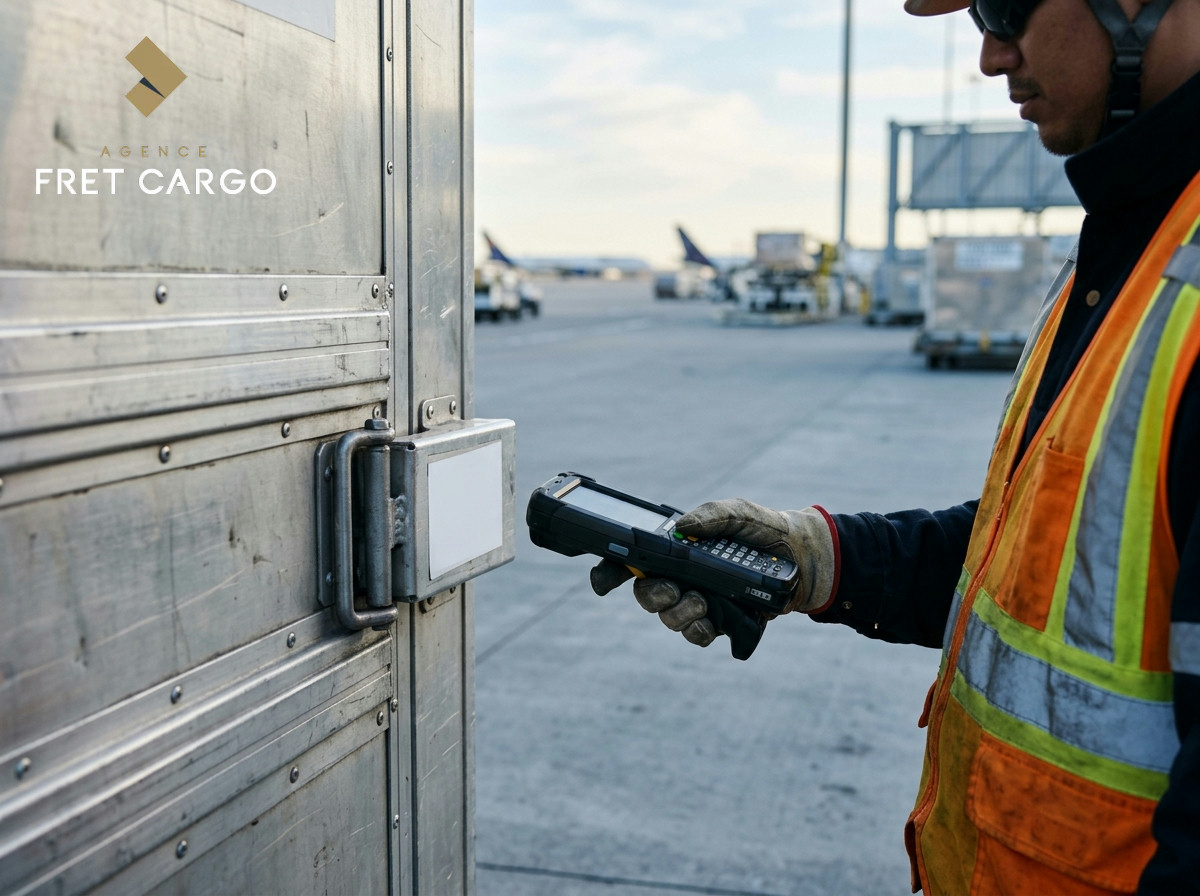
At Geneva airport, the physical handling of freight is carried out by two specialised agents: Swissport and Dnata. To collect goods at the terminal, it is imperative to first complete the import customs clearance formalities and then present the AWB to the handling agent. Local regulations can be consulted in detail with the OFDF. To simplify the task for you, Agence Fret Cargo can manage the entirety of this complex customs clearance and organise the final delivery on your behalf, thus guaranteeing total compliance.
6. Securing your shipments with an approved partner
Entrusting the transport of dangerous goods by air to a non-specialised partner represents a major risk for your supply chain. Documentary rejections, customs fines, and unforeseen storage fees in secure airport zones can quickly penalise your commercial operations and tarnish your reputation with your end customers.
Thanks to our official IATA accreditation for dangerous goods, Agence Fret Cargo guarantees you total peace of mind. Our teams scrupulously verify the suitability of the packaging, validate the marking, and check all the documentation before physical handover to the airline. Our membership in the Global Affinity Alliance network also allows us to coordinate these complex shipments on a global scale, with the same Swiss rigour, from collection to delivery at the destination.
Contact Agence Fret Cargo
📍 Voie-des-Traz 20, 1215 Le Grand-Saconnex (Geneva Airport) 📞 +41 22 798 68 00 📧 hello@fretcargo.com
Any rates and transit times mentioned are indicative market estimates, subject to final confirmation based on your shipment details, the commodity, and current market conditions.
Let us handle the logistics — you focus on your business.