

The gradual return of major global shipowners to a historic waterway is profoundly reshaping international trade routes. The recent passage of very large capacity vessels marks a decisive step for Swiss Suez Canal sea freight. For Swiss logistics directors and supply chain managers, this gradual normalisation offers new strategic perspectives to avoid the persistent saturation of Northern European ports, while rethinking the overall efficiency of their import and export flows.
At Agence Fret Cargo, we support companies in securing and optimising their international flows in the face of market fluctuations. Drawing on our 38 years of experience from our offices located at Geneva Airport, we decode the challenges of this maritime traffic recovery for you, so you can adapt your logistics strategies with agility and anticipation.
1. The return of maritime giants and the state of traffic
Following a complex period marked by massive diversions via the Cape of Good Hope, the sector is witnessing the gradual return of vessels from the COSCO fleet, notably through very large capacity container ships, as well as other major carriers. This resumption of southbound transits significantly shortens the usual journey times between the Asian continent and Europe, thereby providing essential relief to global supply chains that were suffering from extended delays.
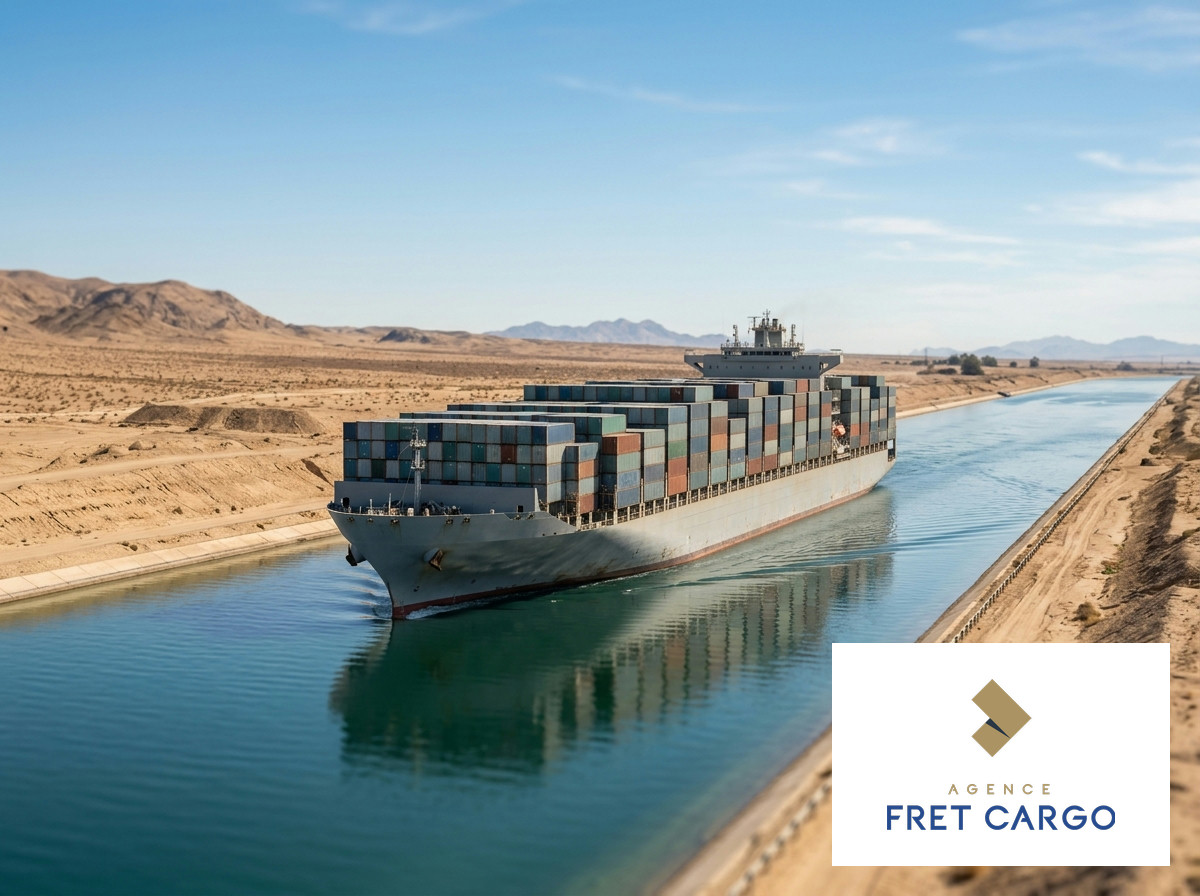
The reintegration of this strategic route by several leading maritime alliances demonstrates a strong desire to stabilise international logistics. Although the regional security situation remains under close surveillance and requires constant risk assessment, the partial reopening of this vital maritime corridor streamlines global trade. This gradual return to normal allows companies to plan their supplies with much better predictability, thereby drastically reducing the time safety margins they previously had to integrate into their production and distribution schedules.
2. The direct impact on Swiss Suez Canal sea freight
For Swiss SMEs, the fluidity of Swiss Suez Canal sea freight is an absolutely major competitiveness issue on the international stage. Passing through the Red Sea and the canal undoubtedly represents the most direct route for goods from Asia destined for the Swiss market. When ships use this vital artery again, transit times are substantially reduced compared to the long detour around the African continent, offering increased responsiveness to importers.
This notable reduction in transit times very directly influences the financial and operational management of stock. Swiss importers can once again operate with much more adjusted stock levels, thereby freeing up valuable cash flow that was tied up on the oceans. Furthermore, the decrease in ship operating costs, intrinsically linked to lower fuel consumption on a shortened journey, tends to stabilise global freight rates in the medium term, a significant advantage for preserving company margins. It is also relevant to consult the recommendations of the State Secretariat for Economic Affairs (SECO) to better understand the macroeconomic dynamics of Swiss foreign trade.
3. The strategic revival of the Genoa-Geneva railway axis
The normalisation of transit through Egypt restores full strategic and geographical meaning to Mediterranean ports, particularly Genoa. Rather than systematically seeing goods travel up to Northern European ports, which are often congested and subject to handling delays, unloading in Italy allows for the effective activation of the Genoa-Geneva railway axis, a particularly relevant logistics alternative for Switzerland.
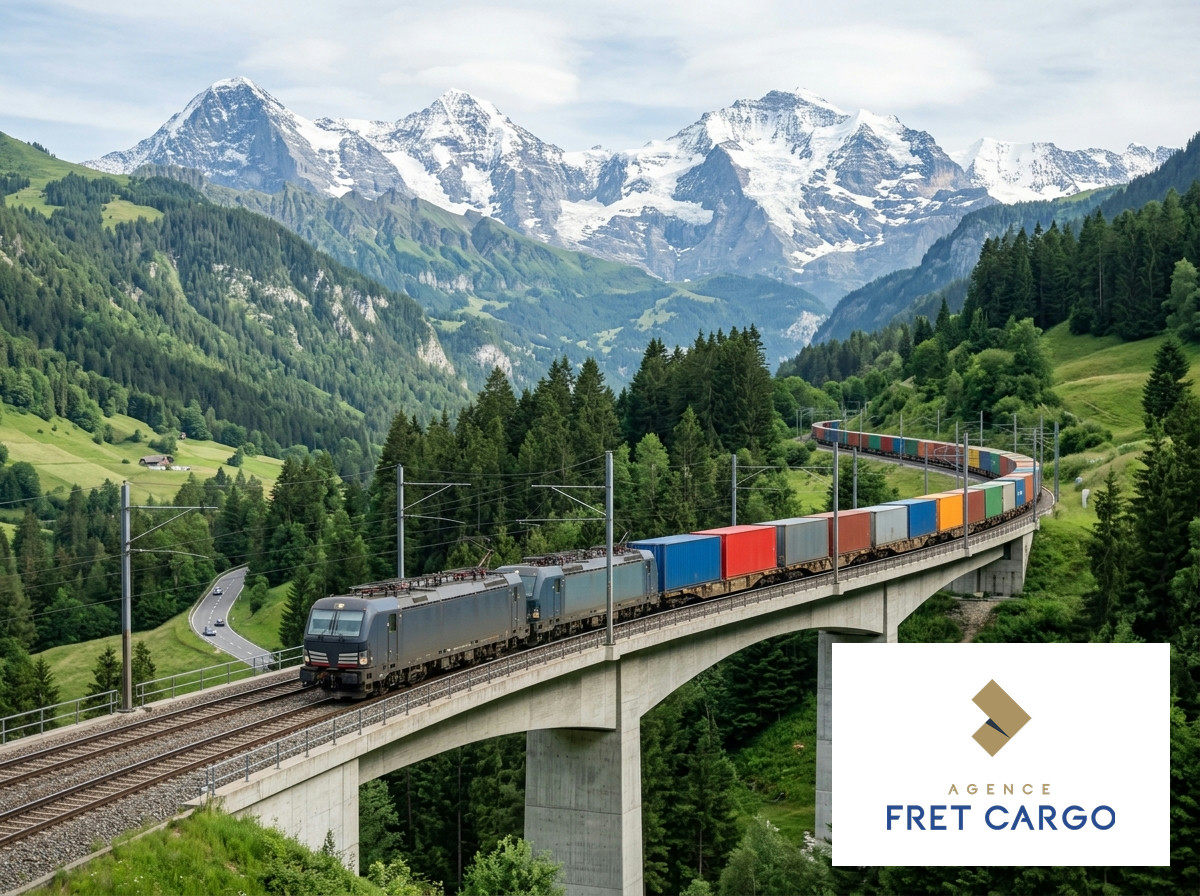
This southern supply corridor presents undeniable logistics advantages for the Swiss market. By deliberately avoiding the overloaded port terminals of the North Sea, you bypass frequent bottlenecks and the uncertainties linked to multiple transshipments. Combined sea-rail transport via Italy ensures generally fast and highly secure delivery directly to the heart of French-speaking Switzerland. This decentralised approach significantly strengthens the resilience of your supply chain by intelligently diversifying your entry points into the European continent.
4. Route comparison and carbon footprint reduction
Beyond the obvious time savings, the return to the traditional maritime route plays a fundamental role in the environmental strategy of modern companies. The shortening of maritime distances combined with the massive use of trains from the Mediterranean basin allows for a drastic reduction in your Scope 3 carbon footprint. This environmental aspect is becoming crucial as regulatory requirements and consumer expectations regarding sustainability continuously strengthen.
| Logistics criterion | Diversion via the Cape of Good Hope | Transit via the Suez Canal (Southern Corridor) |
|---|---|---|
| Asia-Europe transit time | Considerably extended | Generally fast and optimised |
| Port of discharge | Northern European ports (often saturated) | Mediterranean ports (e.g. Genoa) |
| Connection to Switzerland | Long road or rail transport | Direct and short railway axis |
| Environmental impact (Scope 3) | High (maximum distance travelled) | Significantly reduced (direct route and rail) |
By opting for this optimised southern corridor, Swiss companies do not merely rationalise their logistics costs; they engage in a concrete eco-responsible approach. The reduction of indirect emissions linked to freight transport is becoming a real commercial argument and a pillar of corporate social responsibility (CSR), thereby enhancing brand image with partners and end customers.
5. Adopting a hybrid transport strategy in the face of volatility
Despite these very positive signals for international trade, the geopolitical context surrounding Swiss Suez Canal sea freight remains inherently volatile. It would therefore be imprudent to base all your flows on a single rigid logistics scheme. Implementing a hybrid transport strategy is currently the most suitable response to secure your supplies while strictly controlling your costs. To further explore the selection of your shipping methods, our detailed guide Air or sea freight to Switzerland: the essential guide for 2026 provides you with essential additional insight.
- Diversify entry ports by skilfully combining arrivals via the Mediterranean and Northern Europe according to the urgency of the goods.
- Integrate combined transport solutions, such as sea-air, for sensitive goods requiring a perfect compromise between controlled cost and speed of execution.
- Maintain constant flexibility in the choice of maritime alliances based on their internal regional risk management policies and their preferred routes.
- Collaborate with local logistics experts to anticipate Swiss customs regulatory changes and adapt customs clearance processes accordingly.
The gradual reopening of this historic maritime route offers a valuable opportunity to rethink your supply schemes by favouring shorter and more ecological corridors. By combining the proven efficiency of Mediterranean ports with highly flexible logistics planning, Swiss importers and exporters can transform this complex market dynamic into a genuine sustainable competitive advantage.
Contact Agence Fret Cargo
📍 Voie-des-Traz 20, 1215 Le Grand-Saconnex (Geneva Airport) 📞 +41 22 798 68 00 📧 hello@fretcargo.com
Any rates and transit times mentioned are indicative market estimates, subject to final confirmation based on your shipment details, the commodity, and current market conditions.
Let us handle the logistics — you focus on your business.