

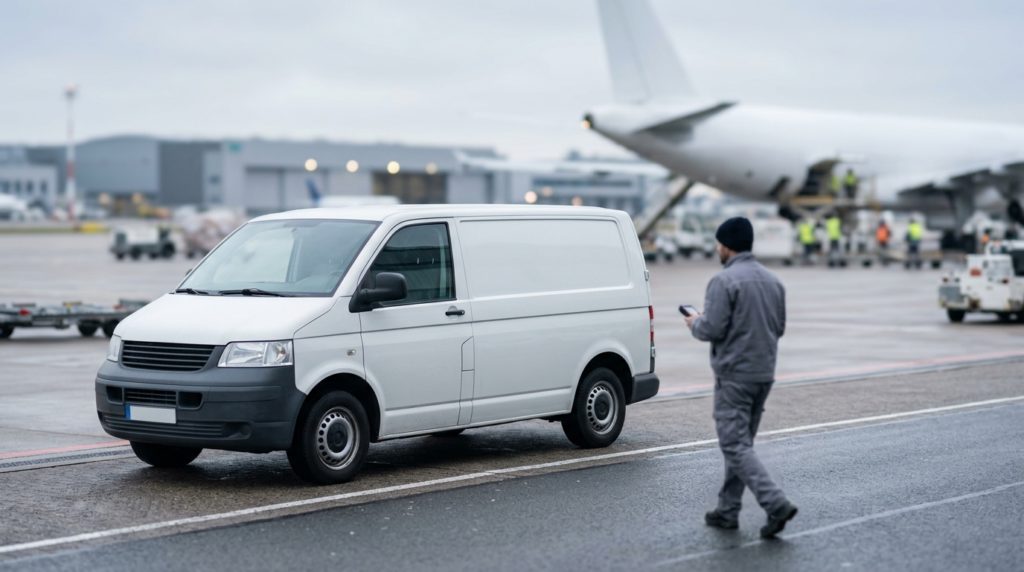
The year 2026 marks a decisive turning point for Swiss SMEs, watchmakers and players in the medical sector who rely on fast deliveries to Europe. The end of the grey area for light delivery vehicles imposes strict new constraints, radically transforming the way high-value goods cross borders. Understanding these technical and legal developments has become essential to maintain the fluidity of your exports and preserve your international trade relations.
From Geneva airport, Agence Fret Cargo supports a demanding clientele through these regulatory upheavals. With 38 years of experience, we design tailor-made solutions for our Fret Cargo Business and Fret Cargo Diplomat segments. Our mission is to guide you through these new compliance challenges, ensuring that your products reach their destinations without a hitch, while respecting the latest legislative frameworks.
1. Understanding the new Swiss EU road transport regulations
Swiss companies, particularly in high-tech sectors such as watchmaking and medical equipment, rely heavily on fluid and fast cross-border logistics. Until now, the use of light vans allowed great flexibility, escaping many rules imposed on heavy goods vehicles. However, this logistical flexibility is coming to an end. The new European directives aim to harmonise working conditions and strengthen overall safety on the continent's roads. For diplomatic missions and Geneva SMEs, this means completely rethinking shipping processes to neighbouring countries. Compliance is becoming a major strategic issue to avoid disruptions.

The evolution of the Swiss EU road transport regulations is part of a broader European legislative framework, known as the Mobility Package. This system aims to regulate international traffic and put an end to distortions of competition between the various market players. You can consult the official texts on the Eur-Lex portal. From summer 2026, hauliers will have to submit to increased checks, significantly altering journey times. Shippers of high-value goods must therefore adjust their expectations regarding express delivery times.
2. The mandatory G2V2 smart tachograph
The most striking measure of this transition is the obligation to equip light commercial vehicles with a precise control device. From July 2026, the G2V2 smart tachograph becomes essential for all international transport in this category. This state-of-the-art device automatically records driving times, mandatory breaks and border crossings by geolocation. For hauliers making regular connections from Geneva, this implies the strict application of driver rest rules, which inevitably lengthens overall transit times.
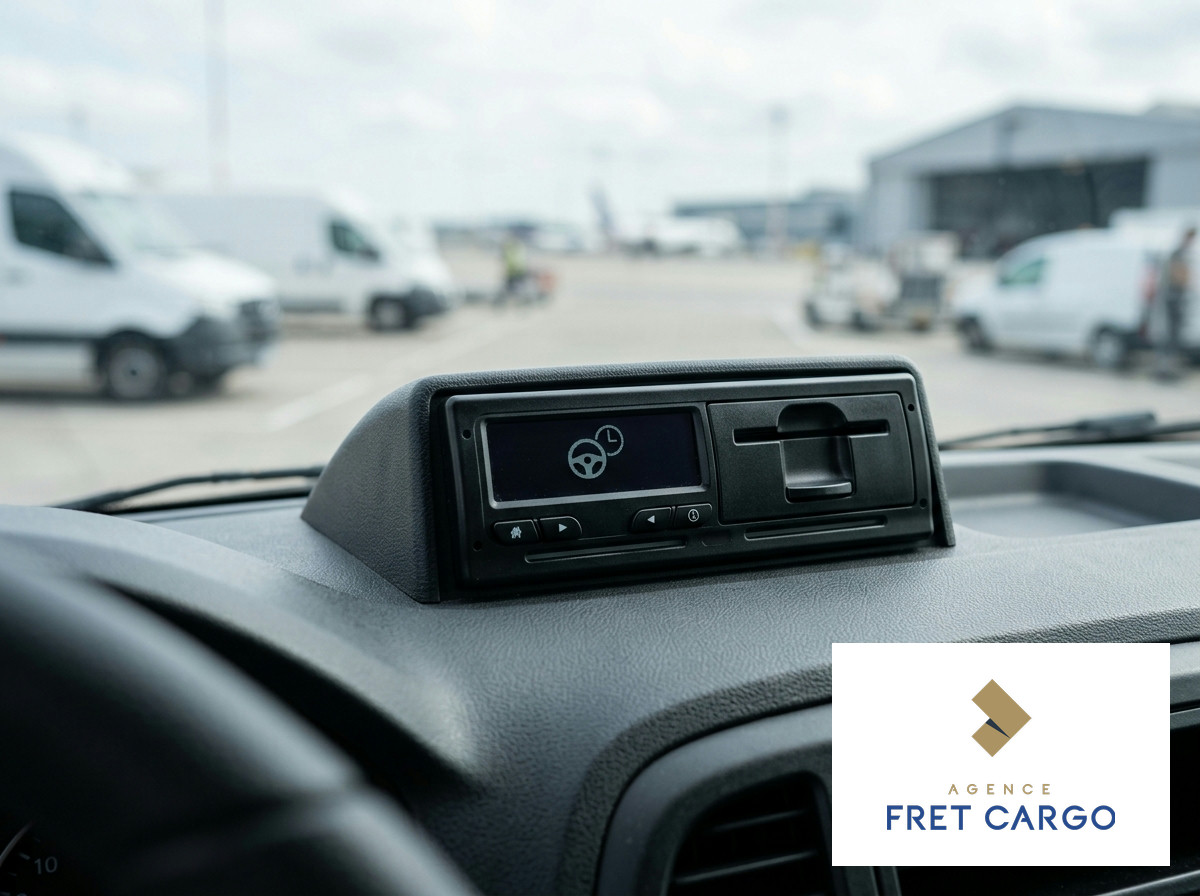
The absence of this device or its incorrect use exposes drivers to severe penalties, including significant fines and the immediate immobilisation of the vehicle during roadside checks. Companies that relied on continuous journeys without legal interruption will now have to plan their routes with a much wider time safety margin. This technical constraint requires a complete restructuring of shipping schedules, particularly for urgent shipments destined for medical laboratories or European luxury boutiques that demand absolute punctuality.
3. Comparison of customs and technical requirements
In order to better visualise the scale of these changes, it is useful to compare the current situation with future obligations. This table illustrates the modifications induced by the Swiss EU road transport regulations for small vehicles operating internationally.
| Logistics criterion | Before 2026 (Grey area) | From July 2026 |
|---|---|---|
| Time recording | Not mandatory for commercial vehicles | G2V2 smart tachograph required |
| Express transit time | Generally fast (continuous journey) | Lengthened (mandatory regulatory breaks) |
| Safety equipment | Basic manufacturer standards | Mandatory ADAS and AEB systems |
| Non-compliance risks | Low during customs checks | Severe fines and freight immobilisation |
This comparison highlights the end of an era where agility took precedence over rigorous traceability. Economic players must integrate these new parameters into their cost and time calculations to maintain the satisfaction of their international partners and guarantee the integrity of their valuable shipments.
4. The integration of advanced safety systems
In addition to monitoring driving times, the European Union imposes a complete overhaul of active safety standards for commercial vehicles. The General Safety Regulation requires all new vehicles to be equipped with advanced driver assistance systems. Among these technologies, autonomous emergency braking (AEB) plays a central role. These devices are designed to detect obstacles, pedestrians and other vehicles, then brake automatically to prevent collisions, thereby protecting drivers and the sensitive goods transported.

The introduction of these technologies aims to drastically reduce accidents on European roads, as detailed by the European road safety initiatives. For fleet owners and logistics providers, this represents a significant material investment. Vehicles that do not comply with these standards will no longer be able to participate in the international transport of goods, which could temporarily reduce the capacity available on the market and influence the planning of your shipments of diplomatic or industrial equipment from Switzerland.
5. The impacts on your customs clearance
The customs at Bardonnex and Ferney-Voltaire, key crossing points for Geneva exporters, will intensify their checks to ensure compliance with these new directives. A vehicle immobilised for technical non-compliance automatically leads to the blocking of the goods. It is therefore crucial that customs documentation is perfectly synchronised with flawless transport logistics. Furthermore, it is important to note that customs rules are also evolving in parallel. For example, the value limit for imports into Switzerland was recently adjusted to one hundred and fifty Swiss francs, thereby modifying profitability calculations for small cross-border shipments.
Mastering these cross-parameters is essential to guarantee the fluidity of your commercial operations. To delve deeper into the issue of global procedures, you can consult our detailed resource: [2026 Customs regulations: The guide for Swiss exporters](2026-customs-regulations-for-swiss-exporters). Meticulous preparation upstream makes it possible to absorb these new constraints without penalising your end customers or compromising the quality of your service.
6. Adapting your shipments from Geneva
Faced with these complex challenges, Agence Fret Cargo deploys its cutting-edge expertise to optimise your transport flows. We handle freight shipments from 30 kg, guaranteeing rigorous management of the new European standards. For lighter parcels, our partnership with the Expedismart group ensures automated and perfectly compliant solutions. This comprehensive approach allows us to structure your supply chains optimally, by exclusively selecting hauliers who scrupulously meet the safety, rest and traceability requirements imposed by the authorities.
Ultimately, the application of the Swiss EU road transport regulations in 2026 redefines the safety and monitoring standards for light commercial vehicles in international transport. Rigorous anticipation of these technical standards allows companies to secure their cross-border flows while avoiding costly immobilisations at checkpoints. Adapting proactively thus transforms a legal constraint into a guarantee of sustainable reliability for exporters and diplomatic missions.
Contact Agence Fret Cargo
📍 Voie-des-Traz 20, 1215 Le Grand-Saconnex (Geneva Airport) 📞 +41 22 798 68 00 📧 hello@fretcargo.com
Any rates and transit times mentioned are indicative market estimates, subject to final confirmation based on your shipment details, the commodity, and current market conditions.
Let us handle the logistics — you focus on your business.