


Transporting goods by air represents an essential logistics solution for Swiss SMEs seeking speed, security and reliability for their international trade. However, when planning your shipments, a fundamental concept directly determines the final cost of your transport: the air freight chargeable weight. Understanding this complex pricing mechanism is absolutely essential to anticipate your logistics expenses accurately, avoid unpleasant surprises during billing and intelligently optimise the packaging of your products. Whether you are exporting high-precision mechanical parts or importing textiles and sports equipment, mastering the subtleties of this concept allows you to make informed decisions and preserve your commercial margins in a highly competitive environment.
Founded in 1988, Agence Fret Cargo puts over 38 years of experience in the complex field of international logistics and freight transport entirely at your disposal. Operating directly from our facilities at Geneva Airport, we support Swiss companies daily in all the crucial stages of their supply chain. Our recognised sector expertise allows us to process your shipments efficiently, guiding you step by step through customs requirements and air pricing structures. Our goal is to guarantee a smooth, secure and perfectly optimised routing of your goods to their final destination.
1. What is chargeable weight in air freight?
In the air transport industry, the physical space inside an aircraft's hold is an extremely limited and precious resource. Consequently, the cost of a shipment is not based solely on the physical mass of the goods. Airlines must imperatively take into account the bulk, meaning the volumetric space occupied by your crates or pallets. The chargeable weight therefore systematically corresponds to the higher value between the gross weight (the actual weight on the scale) and the volumetric weight (the space occupied).
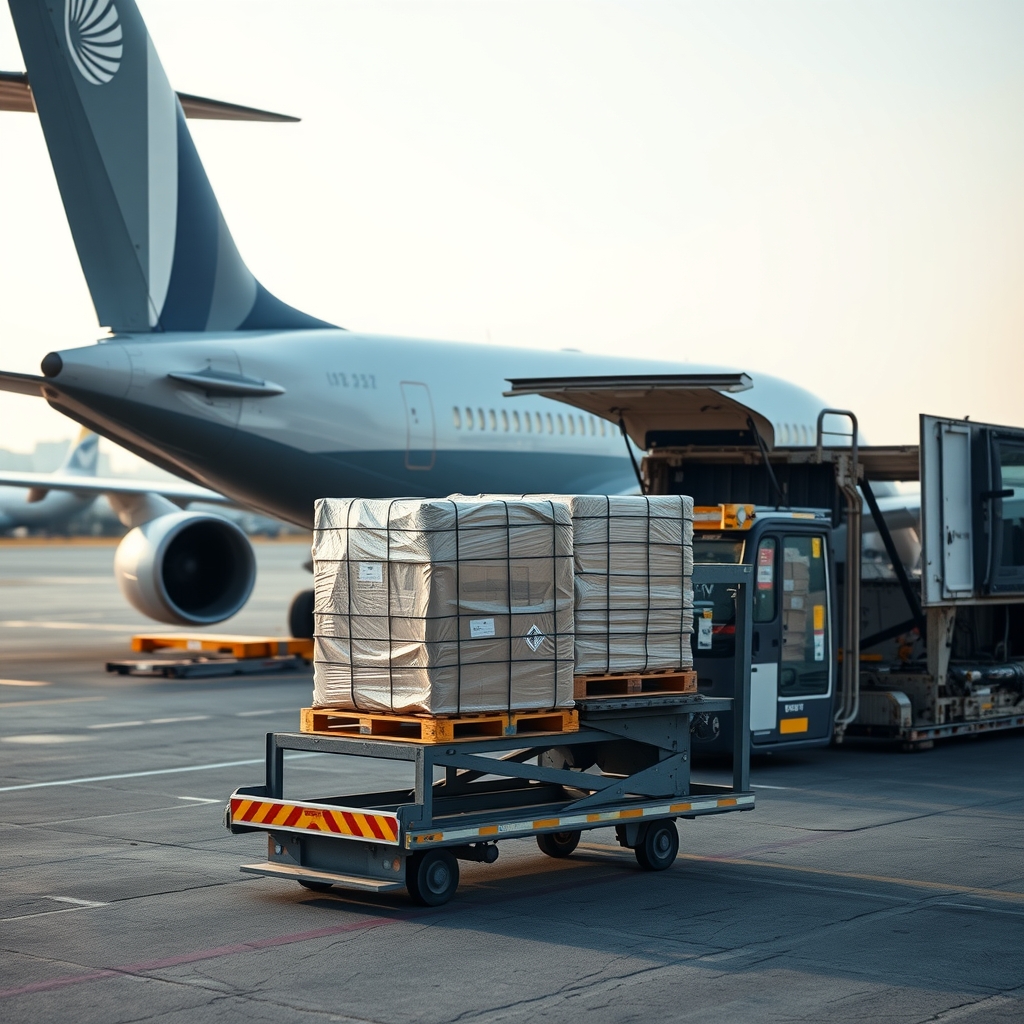
The calculation of the base cost of your shipment is done by multiplying this chargeable weight by the applicable rate per kilogram. However, the final invoice will also include various irreducible taxes and surcharges. Among these is the fuel surcharge, which is directly indexed to the kerosene market price in Rotterdam and applied regardless of the destination or chargeable weight. Added to this is a security tax, linked to enhanced control procedures including X-ray screening, introduced worldwide after the events of September 11. Additional fees for collection, trucking, document issuance or the handling of dangerous goods may also apply.
2. The volumetric weight calculation rule
To establish the volumetric weight of a shipment fairly, the global aviation industry relies on a standardised mathematical ratio. This conversion ratio is precisely defined as 1 tonne for 6 cubic metres. In practical terms, this means that 1 cubic metre of space in the aircraft is considered equivalent to 166.67 kilograms of weight.

To obtain the volumetric weight of your shipment expressed in tonnes, the mathematical formula consists of dividing the total volume of your shipment (in cubic metres) by 6. If you prefer to work directly in kilograms, the operation amounts to multiplying your total volume in cubic metres by 166.67. These calculation rules are universal and the International Air Transport Association ensures the harmonisation of these pricing standards to guarantee the transparency of global trade.
3. Numerical example and principle of economies of scale
To concretely illustrate the impact of air freight chargeable weight on your billing, let us take a specific example comparing the actual weight of bulky goods and their weight calculated according to bulk.
| Shipment characteristic | Gross weight (actual) | Calculated volumetric weight | Retained chargeable weight |
|---|---|---|---|
| Shipment of textile materials | 65 kg | 105 kg | 105 kg |
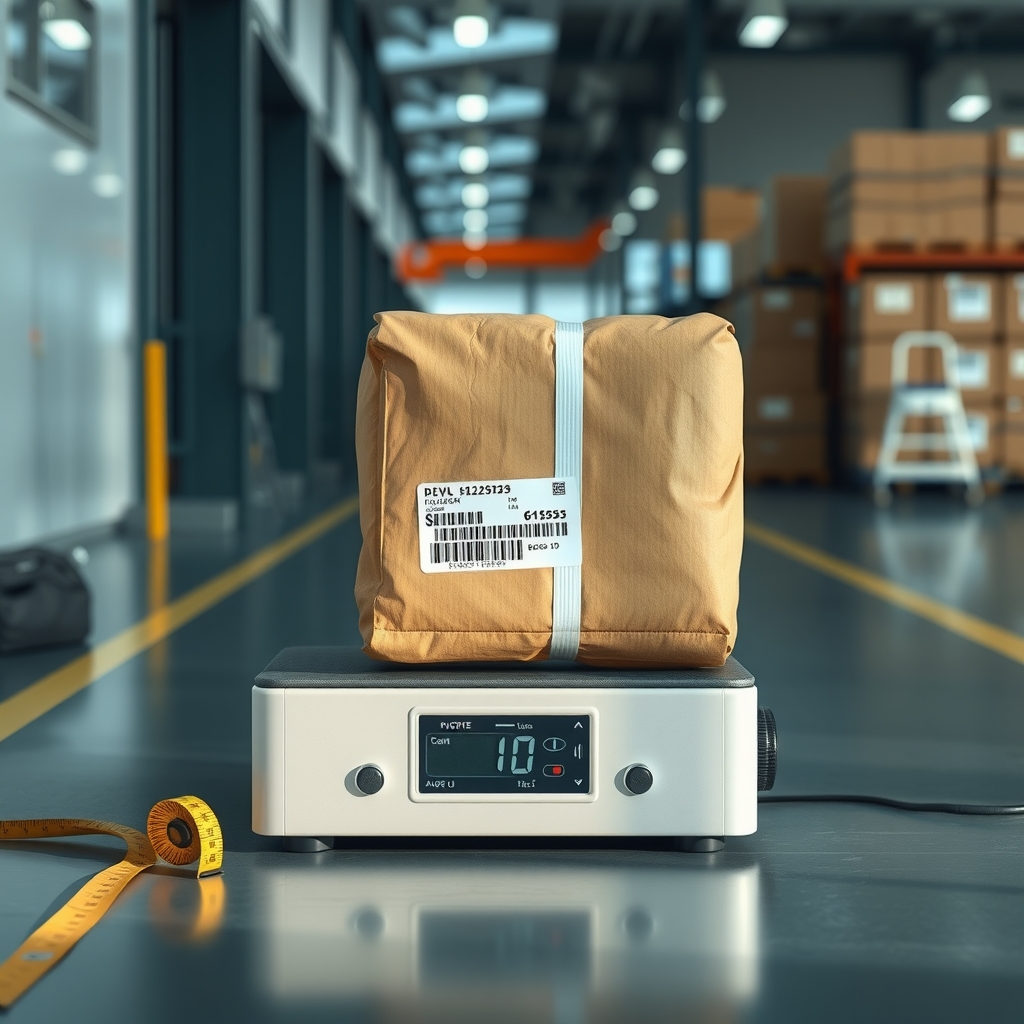
In this specific example, although the goods physically weigh only 65 kg on the scale, their bulky packaging generates a volumetric weight of 105 kg. The airline will always retain the highest value: it will therefore bill the transport based on 105 kg. Furthermore, air freight pricing follows a fundamental principle of economies of scale: the heavier the shipment, the lower the unit rate per kilogram. Thus, shipping 100 kg will cost you less per kilogram than shipping only 40 kg, which strongly encourages the consolidation of your goods.
4. Shipment management and formalities in Geneva
Pricing rules and handling procedures vary considerably depending on the dimensions and weight of your shipment. Agence Fret Cargo directly manages freight shipments from 30 kg, as well as consolidated shipments for which there is no maximum weight limit.

For very small shipments (under 30 kg), which are generally subject to a penalising minimum charge in traditional freight, we work in close collaboration with the Expedismart group. This partnership allows us to offer automated solutions for small parcels at highly competitive rates. During an import, each shipment is accompanied by an Air Waybill (AWB) with a unique number. To collect your goods at the Geneva Airport freight terminal, you must present this document to the airline's handling agent (Swissport or Dnata) and complete the customs formalities dictated by the Federal Office for Customs and Border Security. Agence Fret Cargo can of course take charge of this complex customs clearance and ensure final delivery to your premises.
5. Common mistakes and optimisation of your shipments
One of the most common mistakes made by companies when requesting a quote is providing only the estimated gross weight of the goods. To formulate a highly accurate pricing offer, we imperatively need to know the exact type of goods, the place of departure, the final destination, the actual weight, the complete volume of the packaging, as well as the desired arrival date. Without these volumetric dimensions, it is impossible to determine the actual chargeable weight, which can lead to unexpected pricing adjustments at the time of departure.
Packaging optimisation is therefore a crucial step in your logistics strategy. Using excessively large cardboard boxes containing a lot of empty space will artificially increase your volume, and therefore your final invoice. We always advise our clients to adapt their packaging as closely as possible. Whether you use our dedicated corporate division or our logistics consulting services (AFC Advisory Services), we are here to analyse your flows. To deepen your understanding of transport modes, we invite you to consult our comprehensive guide on [Air Freight](air-freight). Keep in mind that our price quotes are free and generally valid for one month, thus offering you the necessary visibility to plan your commercial operations with complete peace of mind.
Contact Agence Fret Cargo
📍 Voie-des-Traz 20, 1215 Le Grand-Saconnex (Geneva Airport) 📞 +41 22 798 68 00 📧 hello@fretcargo.com
Any rates and transit times mentioned are indicative market estimates, subject to final confirmation based on your shipment details, the commodity, and current market conditions.
Let us handle the logistics — you focus on your business.