
Recent geopolitical tensions, particularly in the Strait of Hormuz, have caused a historic surge in diesel prices across Europe. For Swiss SMEs and exporters in the Geneva region, this energy crisis translates into a drastic increase in logistics costs. The road transport fuel surcharge weighs heavily on commercial margins, making it essential to adopt smarter and more resilient shipping strategies. Faced with this complex situation, it becomes crucial to rethink supply chains, optimise routes and explore modal alternatives to maintain the competitiveness of your exports on the European market.
Founded in 1988, Agence Fret Cargo provides you with over 38 years of experience in international freight forwarding. Operating directly from Geneva airport, we act as a true transport architect for your logistics. We organise each shipment so that your goods arrive safely on the required date, while optimising the combination of transport modes to offer you the best value for money. Beyond planning, our agency manages all administrative tasks, from customs documentation to transport contracts, thus ensuring the compliance of your shipments with local and international regulations.
1. Understanding the impact of the road transport fuel surcharge
The current energy crisis is profoundly reshaping the European freight landscape. The spectacular rise in pump prices mechanically leads to an explosion in the road transport fuel surcharge, which is passed on directly to shippers' invoices. Several European countries have had to implement emergency measures, ranging from caps on commercial margins to the release of strategic fuel reserves, in an attempt to contain this unprecedented surge. For Swiss exporting companies, this high volatility requires increased vigilance and an extremely rapid capacity for adaptation.
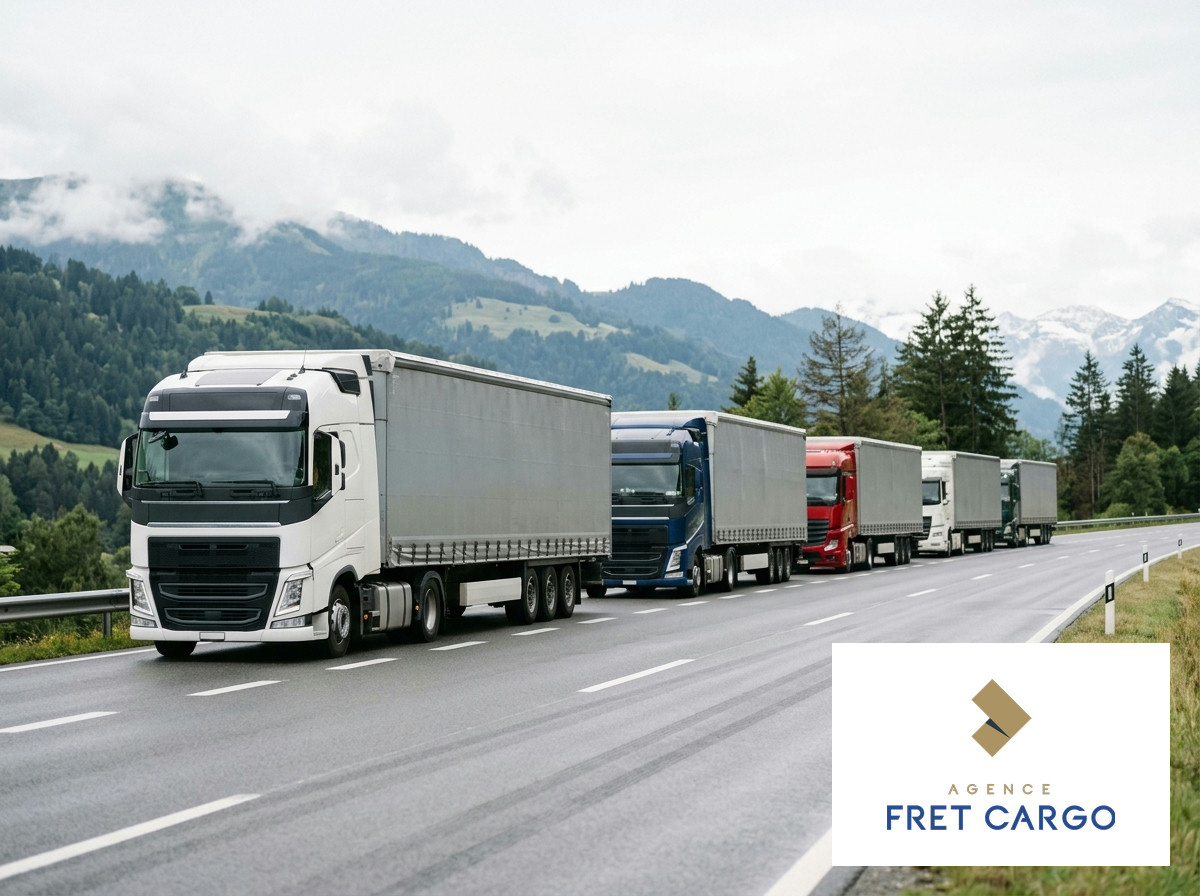
The impact is not limited to a simple additional cost line on your transport invoice. It directly affects the financial predictability of your export and distribution operations. This is why we constantly analyse market fluctuations to advise you on the most stable logistics solutions. By anticipating these tariff variations, you can better protect your margins and guarantee the continuity of your deliveries to your European clients.
2. The optimisation of transalpine corridors
Swiss geography offers major strategic axes for the transit of goods across Europe. The optimisation of transalpine corridors, notably via the Gotthard and Simplon tunnels, plays a determining role in limiting the kilometres travelled by heavy goods vehicles and, consequently, overall diesel consumption. By intelligently choosing routes and crossing times, we considerably reduce the exposure of your shipments to road traffic hazards and fuel-related additional costs.
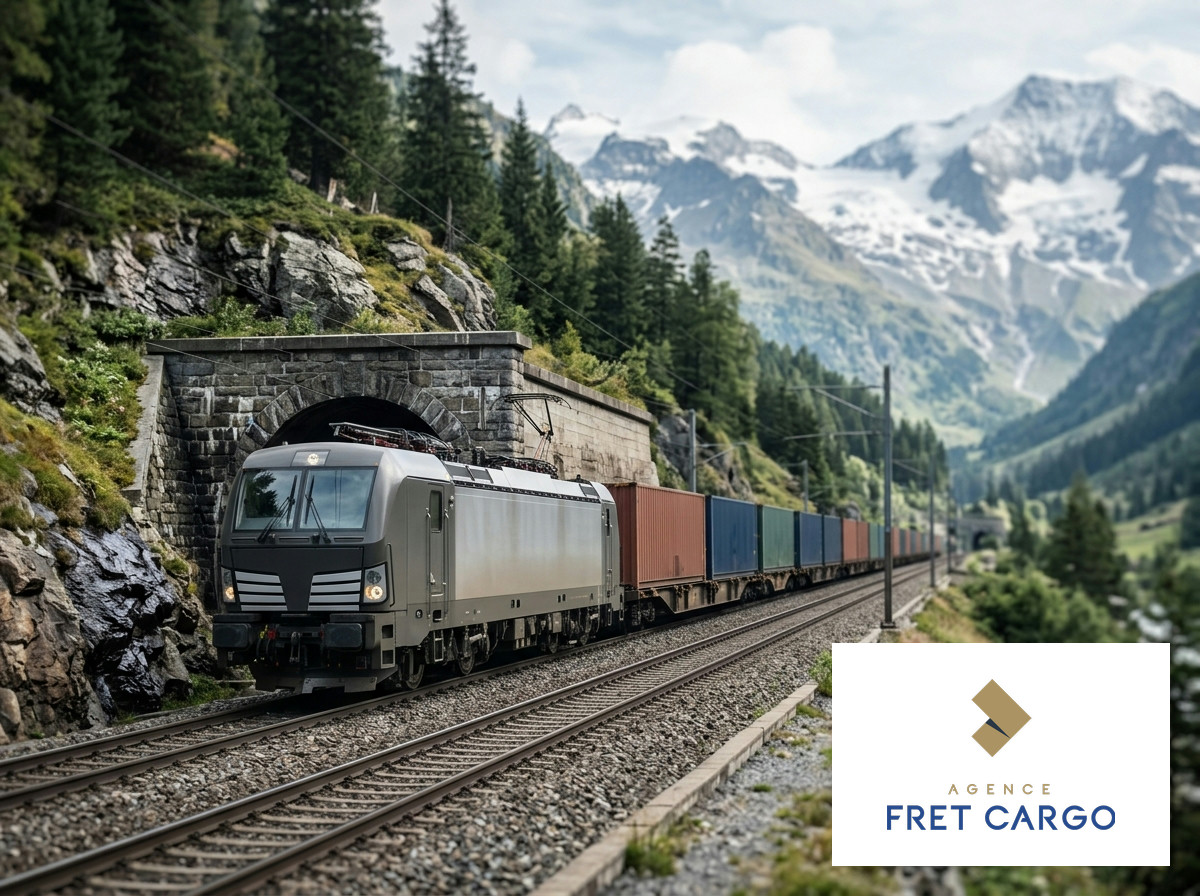
This rigorous route management is at the heart of our profession as an international freight forwarder. We ensure that each journey is planned with the greatest precision, using advanced routing tools. A well-chosen and fluid route is not only a guarantee of speed for your clients, but also a direct cost-saving measure in the face of fuel that has become extremely expensive on the European continent.
3. Modal shift: Comparison between road and combined rail freight
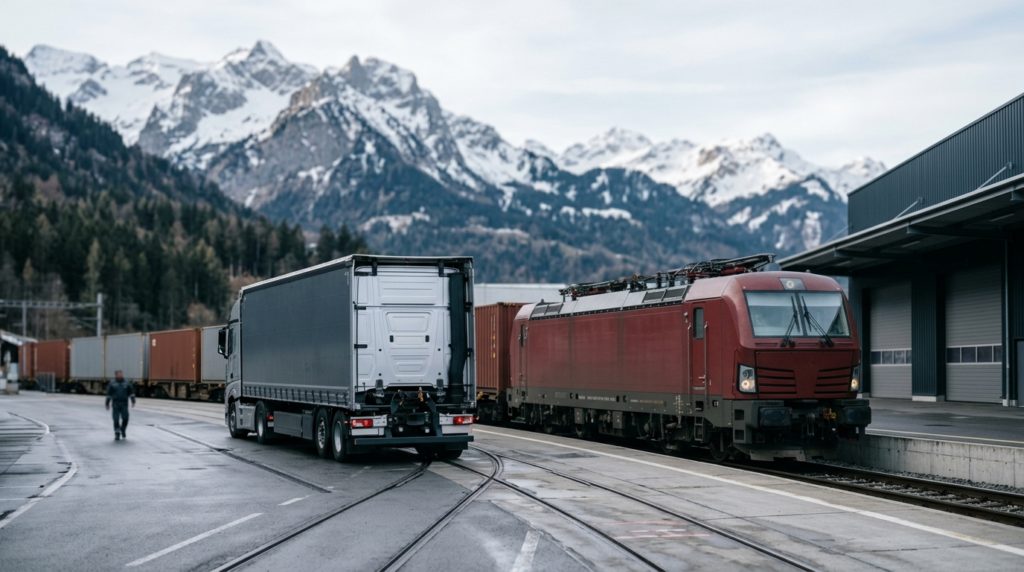
Faced with the inflation of road costs, the modal shift to rail stands out as a formidably effective alternative. Combined rail freight allows your goods to be transported over long distances by train, limiting the use of lorries to only the first and last kilometres of the shipment. This approach drastically reduces the impact of the road transport fuel surcharge while offering a very large loading capacity and a greatly reduced carbon footprint.
| Evaluation criterion | Direct Road Transport | Combined Rail Freight |
|---|---|---|
| Sensitivity to diesel prices | Very high | Low to moderate |
| Route flexibility | Maximum (direct door-to-door) | Dependent on rail terminals |
| Consolidation capacity | Limited to trailer capacity | Very large (full train) |
| Environmental impact | Higher | Greatly reduced |
Although the lorry remains essential to guarantee local flexibility and final delivery, integrating rail for the main leg of your European export considerably stabilises your logistics costs in the long term. This hybrid strategy is particularly relevant for large or regular shipments.
4. Streamlining customs at Bardonnex to avoid waste
A stationary lorry, engine running in a long customs queue, is a source of considerable financial and ecological waste. At the Bardonnex border, waiting times can quickly increase if the documentation is not perfectly prepared in advance. Our agency takes charge of all administrative and customs formalities to guarantee an express and frictionless passage for your goods.
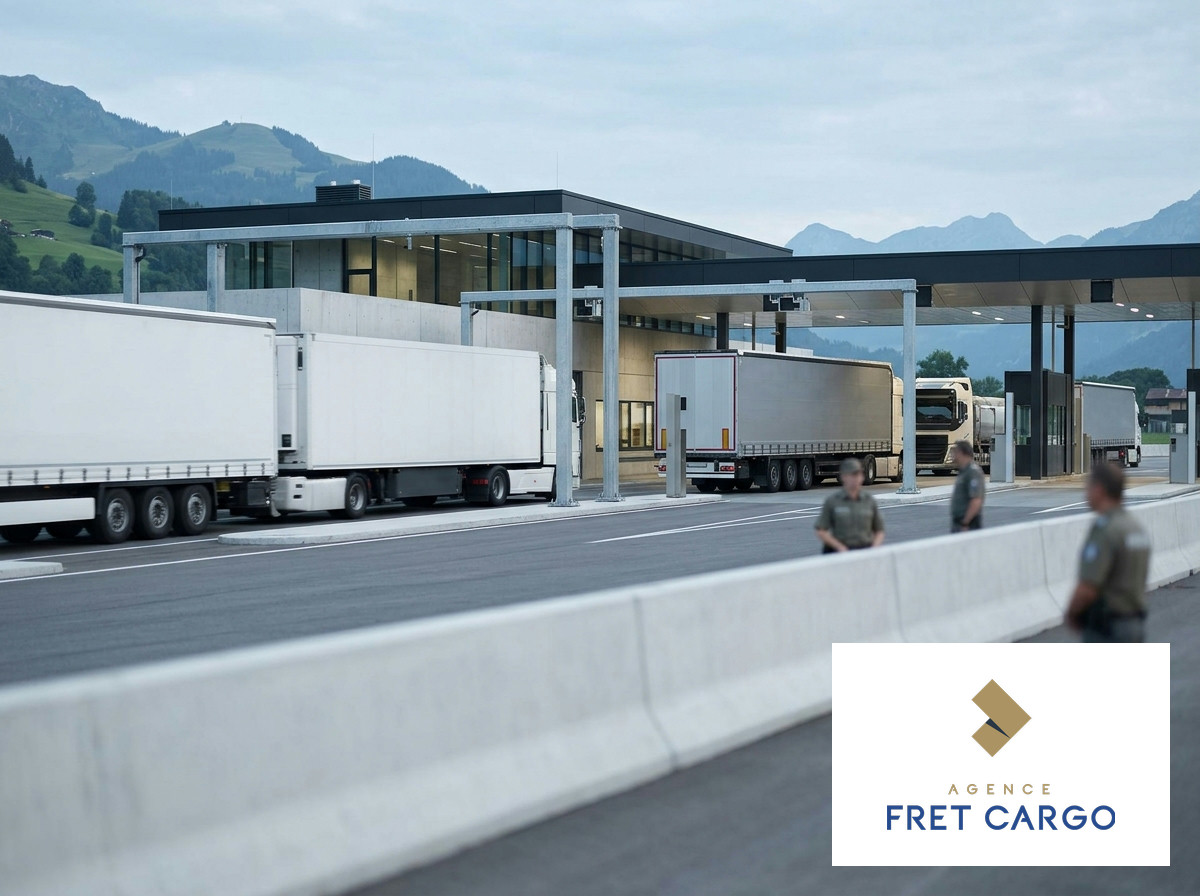
By anticipating declarations according to the guidelines of the Federal Office for Customs and Border Security, we prevent your goods from getting stuck. This customs streamlining reduces overall transit time and prevents unnecessary fuel consumption. Furthermore, it is important to note that since 1 January 2025, the value limit for imports into Switzerland is CHF 150 (previously CHF 300). Below this amount, no VAT or customs duty is collected, which greatly simplifies the customs clearance of small shipments and further accelerates the border crossing.
5. Consolidation and groupage: Pay only for the space used
When transport costs soar, shipping half-empty lorries is no longer a viable option for any business. Freight consolidation, or groupage (LTL), consists of grouping the goods of several clients into a single vehicle or container. Unlike a full truckload (FTL) where you rent the entire lorry for a direct journey from A to B, groupage allows you to pay only for the space your goods actually occupy.
This method makes long-distance shipments much more affordable for small and medium enterprises. Although collection and delivery windows are slightly less precise due to the multiple stops required to collect and distribute the different batches, the economy of scale achieved more than compensates for this flexibility. It is a key logistics strategy to dilute the road transport fuel surcharge across several shippers.
6. Securing your shipments with appropriate insurance
The lengthening of supply chains, particularly when using combined rail-road transport, can introduce new transfer and handling points. It is crucial to understand that the carrier's own civil liability insurance often covers only a small fraction of the actual value of your goods in the event of a claim.
This is why Agence Fret Cargo strongly recommends taking out additional all-risk transport insurance through our agency. This worldwide coverage, applicable to any mode of transport, protects you against unforeseen events at very competitive rates. Our specialists help you accurately assess the risks and design a bespoke insurance solution, while a global network of experts manages any claims efficiently.
7. Long-term strategies for Geneva exporters
The volatility of energy markets clearly demonstrates that traditional logistics models must evolve. For Swiss SMEs, agility has become the watchword for international success. By collaborating closely with an experienced freight forwarder, you benefit from an overview of the best available options, from the fine optimisation of loads to the expert management of complex formalities.
If you wish to deepen your understanding of national and international logistics issues, we invite you to consult our complete guide on [road transport in Switzerland: challenges and opportunities](road-transport-in-switzerland-challenges). By comprehensively rethinking your shipping approach, you will be able to transform this energy constraint into a true sustainable competitive advantage in the long term.
Contact Agence Fret Cargo
📍 Voie-des-Traz 20, 1215 Le Grand-Saconnex (Geneva Airport) 📞 +41 22 798 68 00 📧 hello@fretcargo.com
Any rates and transit times mentioned are indicative market estimates, subject to final confirmation based on your shipment details, the commodity, and current market conditions.
Let us handle the logistics — you focus on your business.